Pages

Connect With Us!

Wednesday, May 20, 2015

Bike Santa Cruz County Releases 2015 Cycling Report

One of Bike Santa Cruz County’s first projects under our new name was the publication of the 2015 State of Cycling report. The report brings together the work of bike organizations throughout the county in 2014, and showcases the cumulative impacts of biking. Through the report, we hope to show that high rates of participation and economic impacts make bicycling a major force in Santa Cruz County, and make the case for more investment in bicycle infrastructure, programs and events.

Highlights from the report include:

  • According to the most recent census data, the City of Santa Cruz ranked second in California for bike to work trips, ahead of San Francisco, Palo Alto and Berkeley.
  • There were nine organizations that did some kind of cycling education and together they reached more than 5,000 youth and adults in Santa Cruz County.
  • Bike industry in Santa Cruz County was estimated to generate more than $800M and employ more than 1,000 people.
  • Revenue-generating bike events raised nearly $300K and drew more than 13,000 participants.
  • We saw tremendous wins for advocacy and new bike infrastructure, including the first green lane treatments in the County, the first two segments of the Soquel Demonstration Forest Flow Trail completed, and the completion of the Arana Gulch Trail.
Check out the full report here.

Success of the Walk to Class Challenge 2015


Walk to Class Challenge Day 2015 was an immense success with over 1,000 participants pledging to walk! This was a huge success, thank you again to all who participated in and helped organize the event. If students uphold this habit within their 4 years at UCSC, we can possibly avoid using over 2,800 gallons of gasoline. If you are interested in coordinating next years event please contact Laura Gracia at lgracia [at] ucsc [dot] edu


Saturday, May 16, 2015

No prospect of an end: living with an ever changing climate

In March of 2014, the UC Santa Cruz Divisions of Physical & Biological Sciences and Social Sciences hosted their second annual Climate Science & Policy conference. Entitled “No Prospect of an End: Living with an ever changing climate”, the conference brought luminary speakers on climate, energy, finance and policy to the Colleges 9/10 Multipurpose Room for two days of lectures and panels. The title of the conference references a famous quotation by James Hutton, the founder of modern geology, who said with respect to the age of the Earth “we find no vestige of a beginning,–no prospect of an end."
Richard Alley Agriculture When it Gets Boring.PNG
“if we look at the last 100,000 years, there is a lot of weirdness. And then it gets boring, and that is what we are used to.” - Dr. Richard Alley, Penn State University


The same can now be said about our changing climate. We know that different geological epochs have spanned vastly different environmental conditions. As the keynote lecture by Richard Alley, Geologists from Penn State University, highlighted, “if we look at the last 100,000 years, there is a lot of weirdness. And then it gets boring, and that is what we are used to.” This boring climatic era has lead to human civilization and development as we know it. Agriculture, urbanization, even labor specialization were tools of human ingenuity made possible by a degree of stability in our environmental conditions. As humankind further modifies the biosphere while dithering over the proper policy responses, we play a dangerous game of brinkmanship.


climate chess.jpg
The monthly average global Carbon Dioxide (CO2) concentration for April 2015 surpassed 400 ppm for the first time since humans began measuring. Emissions in 2014 were stagnant, highlighting the possibility of a “decoupling” of growing fossil fuel combustion from economic growth. However, the trend is far from settled; moreover, “declining emissions” still leave a huge area under the curve, and the greenhouse gases already in the atmosphere will continue to affect the climate for decades, if not centuries, to come. This climatic lag time, coupled with socio-economic inertia in fossil fueled economic growth, pose a great threat to our ability to stop the warming of the world.
There is no prospect of an end to anthropogenic climate change, but this millennium may well be defined by how effectively we respond and adapt to its causes and effects. At the second day of the Climate Science and Policy Conference, panelists addressed adaption via Coastal Resilience and the Wicked Tradeoffs between Food, Water, Energy, and Biodiversity in California and beyond (videos hyperlinked, and very interesting).  
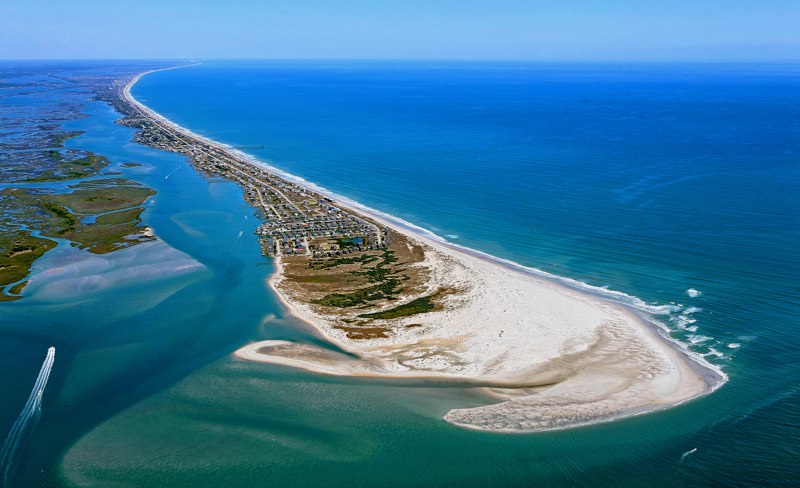
Of particular note to coastal communities are effects of sea level rise, more intense storm surges, and what to protect versus what to let the sea take (an unwelcome and hard proposition). Across the nation, a patchwork of regulations protect coastal ecosystems in various ways; in North Carolina, the state has outlawed accelerating sea level rise from being considered in coastal development decisions. California’s adaptation to rising seas has tried to find a balance between affluent coastal developments and the long history of environmental protection. As Rob Young, panelist and coastal geologist at Western Carolina, elucidates “This is the crux of the matter: the ecosystems have to move, and they are becoming diminished by efforts to hold them in place.”
As humankind looks to the future, adaptation to climate change must be an integral part of our plan to secure and safeguard a prosperous, just and sustainable world.
topsail-island-rentals.jpg
Topsail Island, North Carolina (Source: http://www.findrentals.com/assets/vacations/images/destination-guide-main/topsail-island-rentals.jpg)

Saturday, May 2, 2015

May 2015: Contests & Funding

CSC Request for Proposals Deadline May 8
The Campus Sustainability Council (CSC) would like to fund your student organization’s sustainability projects or events in the upcoming year. Proposals adhering to the criteria for student organizations and relevance to the Blueprint for a Sustainable Campus are eligible for funding. Here is the Request for Proposal (RFP), which outlines all requirements and mandatory steps to apply for funding from CSC. Please fill out the CSC Proposal Form to RSVP for the mandatory grant trainings.

UCSC Residential Housing Survey on Energy Deadline May 27
PowerSave is supporting the overall campus Climate and Energy Strategy project by collecting data related to energy use in residential housing units. Please take the short 3 minute survey here and be sure to enter your UCSC email address to be entered into a raffle for one $100 and 4 $50 bookstore gift certificates! The information collected in this survey will used to help prioritize investment in energy conservation projects and programs. Deadline to participate in May 27 at midnight.

Sustainability Film & Art Contest Deadline July 13
Calling all filmmakers and artists! Are you interested in having your short film or artwork displayed at a film festival series this fall? The Sustainability Office invites you to create a sustainability-related short film or poster. The winner(s) of the competition will have their films and posters shown at the Sustainability Film Festival to celebrate the campus’s 50th Anniversary! Learn more here.

Second Nature Climate Leadership Awards Deadline May 8
Second Nature invites applications for the 6th Annual Climate Leadership Awards (CLA) which recognizes innovative and advanced leadership in sustainability, climate mitigation, and resilience at signatory campuses of the American College & University Presidents' Climate Committee. Nominations are now being accepted. Nominees will be considered based on their commitment to climate neutrality, sustainability education, and innovative leadership. Applications are due May 8, 2015 For questions please contact gboscio[at]secondnature[dot]org.

Future Organic Farmer Grant Fund Deadline May 15
The Future Organic Farmer Grant Fund vocational and higher education grants are available for students enrolled in educational programs that will benefit their future careers in organic production or in becoming an organic professional. Applications are due by May 15th.

Brower Youth Awards Deadline May 18
The Earth Island Institute established The Brower Youth Award for Environmental Leadership to recognize the outstanding leadership efforts of young people who are working for the protection the planet. If you have created, organized or implemented a project or campaign that applies solutions and approaches to relevant environmental challenges, apply before May 18th. To be eligible to apply, you must be 13 to 22 years old.

Energy Dept. $2.5M for Collegiate Clean Energy Tech: Deadline June 7
The newly announced $2.5 million in funding for the Cleantech University Prize (Cleantech UP) aims to support the commercialization of promising technologies for sectors such as solar and wind that reduce carbon pollution and grow the clean energy economy. The Cleantech UP Collegiate Competitions will provide prizes for eight individual university-focused competitions that will equip students with business skills to move clean energy technologies from the discovery phase to the marketplace.

AASHE Sustainability Awards Deadline June 11
Applications for the Tenth Annual AASHE Sustainability Awards are now being accepted for outstanding ideas and initiatives that are furthering the higher education sustainability transformation. Award winners will receive one complimentary AASHE 2015 Conference & Expo pass, one invitation to a special reception during the 2015 conference, an opportunity to present submissions at the 2015 conference, and featured in Sustainability: The Journal of Record. Deadline to apply is June 11, 2015.

Tools of Change Landmark Designation: Deadline June 12
Tools of Change is now soliciting nominations for its 2015 Landmark behavior change case studies in two topic areas - (1) home / building energy conservation and (2) sustainable transportation. If you know of anyone working on a particularly effective, innovative or impactful approach for changing energy or transportation behaviors, please consider nominating them - or yourself. All nominations must include measured impact results. The Nominations Form must be submitted by June 12, 2015. Designations will be announced by October 2015, and case study webinars will be presented between February and May 2016.

Biomimicry Global Design Challenge: Deadline August 3
The Biomimicry Institute and the Ray C. Anderson Foundation announced the opening of the Biomimicry Global Design Challenge. Students are invited to submit commercially viable, nature-inspired solutions to global food system challenges. All participants get access to the Design Challenge Toolbox and supporting resources, including sessions with mentors and biomimicry professionals. The grand prize, to be awarded in 2016, is $100,000. The deadline for submissions is August 3rd.

Friday, May 1, 2015

The Successes of Campus Clean-Up Day!

Amidst Alumni weekend and 50th Anniversary events, students were working hard to maintain the aesthetic beauty and ecosystem health of our unique campus. Almost 100 volunteers from Greek life, the Sustainability Office, the Student Union Assembly, and other student organizations turned up early Sunday morning for the first Annual Campus Cleanup Day. Volunteers broke up into teams all throughout campus to collect over 200 pounds of litter - this was all material that hadn't made it into a nearby trash can or dumpster!

Many of these items weren't even destined for the landfill, but were able to be recycled or composted. Even more shocking - and a credit to the diligence of our participants - were the 3 pounds worth of cigarette butts, amounting to roughly 1.5% of the total litter collected. We hope to make Campus Cleanup Days a recurring event, so if you have a passion for getting wasted and staying trashy, look out for future newsletters to get involved!

May 2015 Green Tip: Sustainable Art

Do you have any old glass bottles or bottle caps? Would you rather repurpose products instead of recycling them? You can turn them into beautiful art pieces! Meesh Montgomery and Jacquelyne Vera, students at UCSC, do just that. With Mother's Day coming up, you can show your mom -and Mother Earth- how much you love her by making sustainable and recycled art.

Meesh makes flower vases, watering devices for their plants, and paper flowers. They use glass bottles, paper, and bottle caps that they find in recycling bins or laying around. They have always had a passion for art and when they started school here, they had a new passion: sustainability. So, they combined the two to make sustainable art.

Meesh says their favorite part of recycled art is how good they feel while making it. They say that, first of all, it relieves a lot of their stress. Second, they feel good being sustainable while doing something they love. They would love to delve more into larger sculptures using recycled materials, but they don't have enough space in their dorm room.

Jacquelyne makes jewelry/charms out of polymer clay and different pattern friendship bracelets. She uses any items she comes across as inspiration. She's currently learning how to make koi ponds and flower gardens in Altoid cans, pies in bottle caps, and terrariums in old light bulbs.


Jacquelyne says her favorite part of making things is how fun it is. She enjoys making things while watching random youtube videos and finds it relaxing. She likes seeing her friends' faces when she gives them the items.

Below are some of her amazing and adorable creations:

Innovative Approaches to Sustainability at Other Campuses

Here are a few selections of the innovative approaches to sustainability taking place on other college campuses. Each of these examples was chosen because they represent ideas that UCSC could potentially implement in some form, or in some cases, already has begun to. If you see something here that you want to make a reality at UCSC, contact the Sustainability Office susted@ucsc.edu and we will help you direct your ideas toward fruition! 

UC Irvine student uses art to inspire climate activism
In art student Kathleen Deck's "Conservation Through Creation” art installation, a section of lawn won’t be watered for a month. The idea is to return an artificial environment to its natural state, and start a discussion about how the changing climate can affect water use and the fragile environment that people have created. Deck is one of 37 UC Carbon Neutrality Initiative Fellows. 

University of Illinois announces winners for Green Office Program
The Institute for Sustainability, Energy, and Environment (iSEE) announced award winners for its 2014-15 Certified Green Office Program on the University of Illinois Urbana-Champaign campus. Twenty-four participating offices collected hardware for making commitments toward and achieving energy and resource reductions during the school year. Here, at UCSC, we also have a Green Office Certification Program.