Pages

Connect With Us!

Showing posts with label OPERS. Show all posts

Monday, September 26, 2016

Zero Waste & Sustainability Outreach Efforts in Action at OPERS Fest

UCSC's numerous sustainability organizations were well represented at OPERS Fest this year on September 20, with students tabling about topics such as sustainable food systems, water conservation, native plant restoration, natural history, seed saving, waste reduction, sustainable engineering, and more. 


Behind the scenes, our very own Zero Waste Team and OPERS student staff were hard at work ensuring that waste from the event was disposed of properly. The Zero Waste Team projected before the event that as much as 98% of waste from OPERS Fest could be diverted from landfills. The survey conducted after the event revealed that actual waste diversion was near that goal, with 97% of waste diverted into compost or recycling instead of the landfill!

These UCSC students took a sustainability pledge to reduce their plastic waste by always using a reusable water bottle. The purpose of the sustainability pledge is to get people thinking about ways they can further incorporate sustainability into their daily lives. It's a pledge to make one small change, which can inspire others so that collectively, we're changing the world. You can check out more pledges and pictures from OPERS Fest on Facebook.

Active zero waste efforts like the monitored 4-part waste station at OPERS Fest are instrumental in driving UCSC towards its goal of campuswide zero waste by 2020. Thanks to everyone who stopped by the Sustainability Tent, composted their food scraps, and helped host this fantastic, annual zero waste event!

Tuesday, May 26, 2015

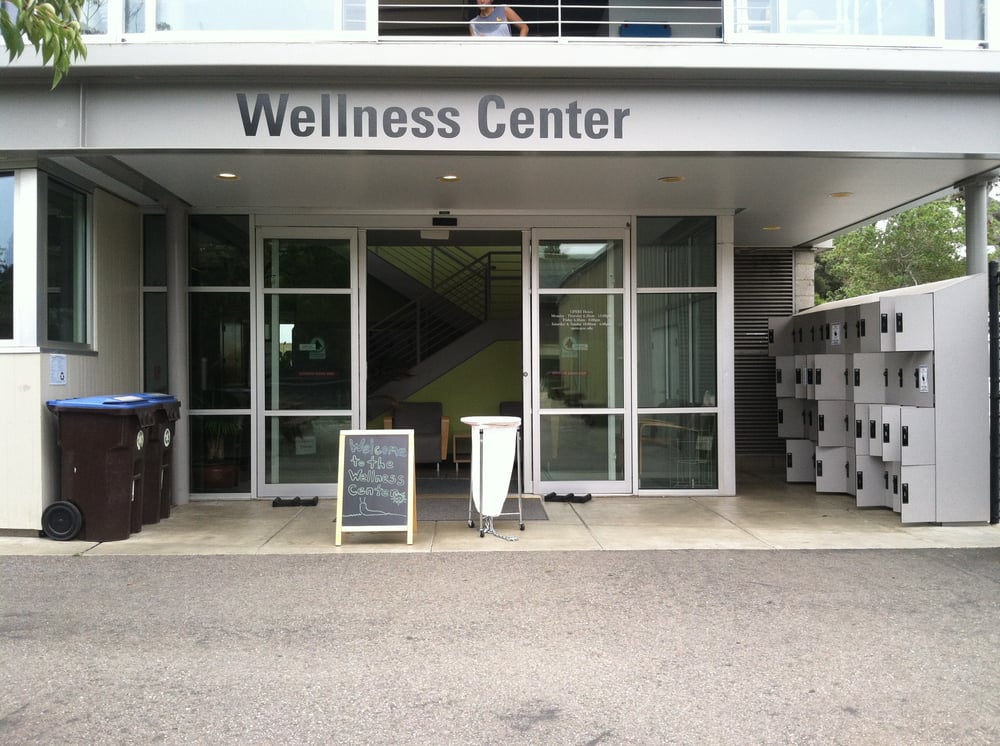
New Wellness Center Rainwater Harvesting

This recently completed project consists of a rainwater catchment system that will serve as the primary water source for toilet use at the UCSC Wellness Center. It is intended to be a small scale pilot project that will give the UCSC community the opportunity to monitor the effectiveness of rainwater harvesting and re-use and provide a working prototype for future rainwater catchment systems. The goal is to learn from this application and be able to apply it to future large-scale systems.


The location was chosen not only for the small-scale applicability but because the site is accessible to most campus users. This project has the potential to provide many educational benefits. Already, UCSC students in the Impact Designs: Engineering & Sustainability through Student Service program, with the help of a local engineering mentor, completed a large portion of the calculations, design, and estimate.

Storm Water Programs Manager Courtney Trask oversaw the project implementation and hopes to increase awareness about water conservation rainwater catchment systems, and sustainability by educating students, faculty, and staff and ultimately reducing municipal water consumption and energy use.

With the use of rainwater harvesting UCSC could reduce the following:
  • use of domestic water 
  • energy used to treat the water to drinking water standards 
  • energy used to pump the water to the treatment plant and then the extra pumping to reach UCSC's elevation 
  • chemicals used to treat domestic water

Wednesday, April 23, 2014

Innovative Approaches to Sustainability at Other Campuses

Here are a few selections of the innovative approaches to sustainability taking place on other college campuses. Each of these examples was chosen because they represent ideas that UCSC could potentially implement in some form, or in some cases, already has begun to. If you see something here that you want to make a reality at UCSC, contact the Sustainability Office susted@ucsc.edu and we will help you direct your ideas toward fruition!

EPA Honors UCI for Zero Waste and Food Recovery Achievements

The U.S. Environmental Protection Agency recently acknowledged the university for its zero waste and food recovery efforts. The zero waste program diverts 83 percent of the campus’ total waste materials from landfills by recycling, reusing and composting. The university has increased its food waste diversion from 90 tons in 2010 to 500 tons in 2012, when it joined the EPA’s Food Recovery Challenge. The advances in university recycling programs include: Commingled bins in 170 classrooms have increased recycling from 0 percent to 75 percent in the first year of use; Hydration stations around campus that promote refillable water bottle use have reduced the use of disposable plastic bottles by 14 tons; More than 509,000 reusable bottles have been filled.Nearly 90 percent of campus events with more than 2,000 attendees are classified as zero-waste, thanks to the purchase of specialized bins. This year UC Santa Cruz has the Chancellors Sustainability Challenge but we have a lot of work to do to catch up to UC Irvine. We can do it! Take the pledge today.


U Maryland Uses Moss to Clean Pool

In an effort to reduce the amount of chemicals used to clean the university's pool, sphagnum moss aids in the cleaning process by stabilizing the pH, which makes the chlorine more effective. They had the swim team, which spent five to six hours a day in the pool — they really liked it, they also had water polo. … They said they could breathe easier. Each pool has its own surge tank, which holds water that is displaced when more swimmers climb in. A pump keeps water flowing through the tank, allowing the moss to filter the water. We should do this for our pool at OPERS.

Tuesday, April 1, 2014

Where the Health Can You Eat Around Here?

Dining recently hosted a Healthy Menu Tasting that was FREE to the campus community. The event was held at the Terra Fresca Restaurant in the University Center. From 3:30-5:00 PM students and campus members were served tasty and nourishing dishes from the new Spring Healthy Monday’s menu currently available at the campus dining halls, and several cafes. Even with a downpour of rain approximately 150 guests arrived & campus chefs were kept busy serving up items like: Green Curry Veggie Bowls, Eggplant Lasagna and Chipotle Seitan Fajitas. Campus partners including OPERS, Wellness Center, and our Health Center joined in for the afternoon and brought along resources and information to share with the crowd! 

If this interests you, on April 23rd from 11:30-2:30 PM in the College 9 and 10 Multipurpose room, Dining will be hosting their 4th Annual Organic & Local Foods Fair. This is also a free event. And everyone is welcome to stop in! 

Come meet and talk with our purveyors and vendors of local /organic products that are served here at UCSC. Meet growers, manufactures and supplies who are keeping engaged with REAL food! Plenty of free samples, tasting of new and interesting foods, share your likes and engage with others about what excites your palate!- Don’t miss this event, it only happens once each year! Yes, this will be another Zero Waste Event! 


Check out our website and Facebook for current updates!

Monday, November 18, 2013

December 2013: Classes, Training, and Community

CAN Announces the XV International Agroecology Shortcourse Nicaragua
The Community Agroecology Network (CAN) and the Social Development Organization of Nicaragua (ASDENIC), along with an interdisciplinary coordinating committee, announce the XV International Agroecology Shortcourse which will be held in the Parque de las Ciencias Estelimar, located near the city of Estelí in the north of Nicaragua from July 6-18, 2014. The main topic of the course is Agroecology and Social Transformation: transdisciplinarity, health, and human development. Applications are due April 15th, 2014. See the announcement and event poster for full information.

Demeter Seed Library
At Demeter Seed Library, it is the time of year to plant peas, fava beans, artichokes, radishes, garlic and lettuce! They will be hosting office hours at Oakes 307 on Wednesdays from 2pm-3pm so you can come by to pick up seeds, and talk to them about backyard gardening and sustainable agriculture. They would love to assist any of you in starting a garden so that you can have access to fresh produce and your own seeds! So go connect with them!

Maui Wowie: Alternative Spring Break to Hawaii
Step into spring break to engage and explore the island food system of Maui from production, research, and education to alternative market sites. Bridging service learning on island agriculture-education sites with hands-on tours of coffee farms and native gardens, participants will be immersed in a land rich with historical struggles and ripe with culture and community efforts to foster sustainability. Learn more here.

Common Ground Center Courses: Winter 2014
This Winter, Common Ground Center is pleased to offer four courses through Kresge College. Permaculture and Whole Systems Design (Kresge 161) is a new course that focuses on concepts, principles, and practices of permaculture and whole systems design. Transformative Action (Kresge 62) is a course on personal and societal transformation. Starting with the self, students examine past experiences, personal growth, passions, and the desire to make a difference in the world and participate in a civic engagement project for four hours per week. Tools for World Changers (Kresge 64) is a 2-unit course for developing life skills that benefit you in college and beyond through studying the most commonly used and effective methods for personal productivity, project management, interpersonal communication, event hosting, and regenerative community design. 2 and 5 unit internships are also available. A fourth course offering is a 2-unit internship with People Power of Santa Cruz County paired with a weekly class focused on transportation and its relationship to social justice, sustainability, and community. Email commonground [at] ucsc [dot] edu for more information, or check out their newsletter. 

Waste Awareness
Where does your dining hall weigh in this quarter? Check out the results from recent Waste Awareness events conducted by Dining, Sustainability Office's Zero Waste Team, and volunteers from the Student Environmental Center.
  • College 8/Oakes: 2.1oz per person
  • Cowell/Stevenson: 2.0oz per person
  • Crown/Merrill: 1.6oz per person
Thank you students we are getting better at wasting less food! One plate at a time! Look out for the final two Waste Awareness Events of the quarter at Colleges 9 &10 and Porter/Kresge! If you'd like to get involved with food waste efforts and become a Waste Warrior on campus email Crystal Owings, Dining's Sustainability Intern, at cowings [at] ucsc [dot] edu.

Winter People Power Bike Ride through OPERS
If you like riding bikes for fun or for commute, want to find new routes, and enjoy making friends while riding along, be on the lookout for a bike ride opportunity through the Recreation guide this winter! The winter Rec guide will be posted here December 15 and registration begins on January 9 at 9 AM.

Seymour Center Behind-the-Scenes Tours
Learn more about exciting marine research behind the scenes and experience the spectacular surroundings of the Seymour Center at one of the tours offered each week, including Marine Mammal Research Tours, Younger Lagoon Reserve Tours, and Santa Cruz Municipal Wharf Tours. For details, please visit the website.

TAPS seeks to connect with Electric Vehicle (EV) drivers
Interested in learning more about electric vehicle charging developments planned for UCSC? Want to know of potential electrical shutdowns at Core West? Transportation and Parking Services is wanting to be in better touch with our electric vehicle user community at UCSC – please send an email to Teresa at tabuika [at] ucsc [dot] edu to be added to the list of current electric vehicle users. Learn more about UCSC's current EV accomodations on the TAPS website.

Tuesday, September 10, 2013

October 2013: Classes, Training, & Community

Healthy Mondays in the Dining Hall
Are Mondays a tough day for you? Come check out Healthy Mondays--where all health breaks loose--at a dining hall near you. Don't forget to celebrate the end of the week with us at Farm Fridays, where fresh and local ingredients are always on the menu. For an updated list of Healthy Monday and Farm Friday locations, check out the website.


The Kresge Community Natural Foods Co-op is a non-profit student-run food store located on the south side of Kresge College. It has been a Kresge College tradition for over twenty years, supporting small farmers, the UCSC Farm Project, and the Kresge Organic Garden. While anyone can buy food at the Food Co-op, members receive a discount. Come in for groceries, lunch, snacks, hot coffee, tea, or just to spend time with your friends. Hours: Weekdays 9 AM - 6 PM


October Seminars Offered with Common Ground Center
The Common Ground Center, located in Kresge College and promoting social and environmental change, is offering seminars throughout October.  There will also be a Common Ground Open House and World Cafe on October 21st from 6:30-9:00 PM in the Kresge Seminar Room. To learn more about Common Ground and the seminars they offer, check out their website and subscribe to their newsletter here.  


PowerShift Youth Conference: October 18-21

PowerShift is an influential youth conference that brings together more than 10,000 young, passionate people from across the United States to stop fracking, divest from the fossil fuel industry, and build a clean energy future to address the climate crisis. It aims to create a shift in our nation's political systems and energy systems (both power systems) - thus, a "Power Shift." The conference is in Pittsburgh during October 18-21, and is being held in this region because participants plan to demonstrate on the doorsteps of large companies promoting fracking in the region. You can register for the conference here and can contact David Shugar (dshugar@ucsc.edu), who is a regional coordinator for this event and can help answer questions and provide funding opportunities for registration, travel, and accommodation.

TAPS seeks to connect with Electric Vehicle (EV) drivers
Interested in learning more about electric vehicle charging developments planned for UCSC? Want to know of potential electrical shutdowns at Core West? Transportation and Parking Services is wanting to be in better touch with our electric vehicle user community at UCSC – please send an email to tabuika@ucsc.edu to be added to the list of current electric vehicle users. Learn more about UCSC's current EV accommodations on the TAPS website.

Santa Cruz Municipal Wharf Tours
This 30-minute guided tour offers insights into one of the longest wooden piers in the United States. The Santa Cruz Wharf extends a half-mile out to sea in a dynamic and truly marine environment.Seymour Center docents lead tours of the wharf every Saturday and Sunday at 1:00 p.m. and 3:00 p.m. year-round. Tours are free and open to the public. Meet at the Wharf Stage behind Olitas restaurant.  For more information about this project, check out the Seymour Center website here. 


Two Environmental Engineering Classes Offered for Fall
Looking for an extra class and love sustainability?  College Eight and Electrical Engineering are offering two sustainability-related classes:  EE80S, Sustainability Engineering and Design, MWF, 2-3:10; and CLEI 150A, Sustainability Praxis in the Built Environment, TTh, 4-6 PM. Sign up now on the MyUCSC portal if interested!


C2C Fellows Sustainability Leadership Workshop

Bard's C2C Fellows sustainability leadership workshop is coming to the Boston area in October!  C2C Fellows believes that young leaders in business and politics can change the world. Current students and recent college graduates are invited to attend the C2C Fellows Sustainability Leadership Workshop at Bentley University in October. Graduates of C2C workshops are eligible for partial scholarships to CEP’s master programs in environmental policy, climate science and policy, and sustainable business, as well as scholarships for follow-on leadership trainings. Encourage young leaders you know to apply today. The cost of the weekend trainings is $30 (including food, and lodging for those traveling over an hour).

Sierra Institute California Wilderness Program
Through the Sierra Institute's California Wilderness program, UCSC students and peers from UC Davis and Humboldt State spent the summer quarter backpacking around the state, studying the human-nature relationship through lenses of psychology, philosophy, and literature, letting nature to be the classroom. Read about their adventures on the Sierra Institute blog, and find out about future for-credit program opportunities at their website.


Sustainable Utility Networks of California Seeks Interested Students to Join
The proposed Sustainable Utility Networks of California (SUNS California) is seeking students interested in joining design teams.  SUNS California will be a new institute affiliated with UCSC, to be based in a zero net energy building on land adjacent to Long Marine Lab.  The Sustainability Engineering and Ecological Design (SEED) group, which is participating in this effort, is seeking students for Fall Quarter and beyond who would like to contribute to this unique effort.  We are planning to convene five working groups (faculty and students) on: Facility Design; Land Use; Transportation; Site ecology & protection; and Regulations and legal issues.  For more information, please contact Ronnie Lipschutz at rlipsch@ucsc.edu.

The 2013 California Sustainability in Higher Education Conference
Students and staff from UCSC came together at the Sustainability Conference that was held in Santa Barbara over this past summer. They attended presentations that each described the new sustainability innovations occurring at other universities throughout California. We shared a couple of our campus's projects including the Greenwashing Training Tool that was implemented over the past year. Go sustainability slugs!

Friday, February 15, 2013

BYO Mug Program and Zero Waste Events


Reducing single-use paper cups, and Greening Cafes 

Did you know that you can divert 0.25 lbs of CO2 emissions (from manufacture and transport) each time you avoid a paper cup? Even though paper is recyclable, paper coffee cups are not because they have a plastic coating inside that forces their diversion to the landfill. 

Some Dining cafes do currently provide compostable cups, but they don’t always end up in compost bins, so avoid those paper cups and pledge to Bring Your Own Mug! Most cafes on campus provide at least a 10 cent discount, and you can use those green Stamp Cards at all Dining-operated cafes that provide a FREE drink if you BYOM 7 times. If you have a smartphone, you can also download the app Gving to use at all the Perks locations. 

The best way to always keep your mug handy is making it a routine to rinse it right after each use and then place it in your backpack or where you can easily find it. You can even personalize it, and there are a variety of styles of mugs available on campus and in the market to choose from. Find more cool tips and facts here: Carbon Rally  and Sustainable Choices.


Zero Waste Event Commitment
Are you involved in a SOAR or any organization that holds events? Apart from saving money, you can make a big impact in reducing our campus waste stream by making a formal commitment to zero waste. Studies have revealed that 56% of people remember what they visually observed at large events (such as recycling and compost bins being used!), while only 18% remember the cold hard facts they've been taught.  So imagine the difference it would make if the majority of campus events were zero waste! UCSC is already on the right track since one of its biggest events, the OPERS Festival, is a zero waste event. 

Through our pilot project, we plan to recognize as well as increase zero waste practices at events, especially within the SOAR community and hope to have 2-3 committed organizations by the end of the year. If you're interested in participate, or already hold zero waste events, let us know at zerowasteucsc@gmail.com.


To learn more about zero waste events, check out this guide!


Sunday, November 25, 2012

Fall Waste Report and How You Can Help

The school year is off to a great start for waste reduction at UCSC! The Sustainability Office's Zero Waste Team has been working with campus partners and student organizations like the Student Environmental Center to help UCSC reach its commitment of being a zero-waste campus by 2020. Zero Waste is defined as having 95%-100% of all waste from campus diverted from the landfill through reducing the use of disposable materials and repairing, reusing, recycling or composting everything else.

Learn how the Zero Waste team has helped to make our zero-waste goal a reality at student move in, OPERS fall fest, and through a new reusable dishware program.

Fall 2012 Move-In
Each year freshmen and many returning students move into on-campus dorms and apartments, bringing with them thousands of pounds of waste. To insure that recyclable materials ended up in the right waste stream, the ZWT set up “cardboard corals” during move-in week at each college so students and parents could easily sort their waste into cardboard, Styrofoam blocks, Styrofoam peanuts, plastic film, and mixed recyclables. This year at move-in we collected:
  • 42,500 pounds of cardboard, the equivalent of 357 trees! 
  • 600 pounds of Styrofoam blocks that will be donated to a company that makes surfboard blanks (learn more about that company here)
  • 21,380 pounds of mixed recycles (aluminum cans, plastic/glass bottles, paper)
  • 300 pounds of plastic film; think about how light plastic film is, and how much must make up 300 pounds worth of it!
That's almost 65,000 pounds of recyclable material that was diverted from the landfill during move-in this year!


OPERS Fall Festival
Working with the recycling crew and OPERS staff, the ZWT set up and monitored four zero waste stations around this campus-wide event. Volunteers, or "trash-talkers," helped advise attendees about which bin their waste belonged in, helping keep our streams as pure as possible and educating students and festival-goers about what sustainability and zero waste looks like at UC Santa Cruz. We call this event "zero waste" because we greatly reduce the waste that goes to the landfill to a minimum. Making OPERS Fest zero waste is an ongoing process that also involves educating attendees about how to sort their own waste, and next year the campus will aim for even higher rates of "zero waste." 

For the first time, all waste was weighed and recorded, and these numbers will give the campus a starting point from which we can watch our waste reduce toward zero:
  • 1,755 pounds compost (that's about how much a typical giraffe weighs!)
  • 181.5 pounds recycling
  • 167.5 pounds cardboard recycling
  • 197.5 pounds trash

Slugware
Think about how much energy, water, time and money it takes to manufacture a disposable plate. To have it promptly disposed into the trash can after you eat from it for 10 minutes doesn’t seem very worth it. To change this, the Zero Waste Team piloted a project last year called “slugware,” an act of replacing disposable dishware with re-usable dishware at UCSC events. This would save tons of waste from entering the landfill and would also save the school plenty of money. As of now, the Ethnic Resource Center has slugware available for their events and College 8/Oakes and Crown/Merrill dining halls are participating in the washing of slugware. It is the goal for this year to expand slugware to other organizations and have the participation of all five dining halls. If we succeed, just imagine all the resources we're saving!

And here’s how you can help with campus waste reduction:

Food Recovery Challenge: Take only the food that you will eat in the dining halls, at campus vendors and events. Join us in our goal to reduce food waste by 5% by the end of this year and learn more about this goal here.

Compost: All dining halls and cafes run by dining compost your food scraps and to-go containers. Every month 50 tons of waste is diverted from the landfill from composting, so don’t forget to compost!

BYOM: Bring your own mug to campus!  Every year, students use tens of thousands of paper cups that go straight to the landfill.  Between 2010-2012 cafés on campus used 568,000 paper cups, 413,500 lids and 266,100 cup sleeves.  That’s a lot of trash! But we can change these figures:  If you bring your own mug to any coffee shop on campus you will receive a discount. The Perk Coffee Bars even have a Bring Your Own Mug Coffee Card that give you a FREE drink when you bring a mug seven times!

Reduce Paper Towel Waste: Check out information here about our pilot project with Path to a Greener Stevenson to eliminate paper towels in the restrooms at Stevenson College. Paper towels are a huge part of our waste stream and simple changes like eliminating paper towels from the residence halls can go a long way in reducing our waste!

Apply to be a Student Sustainability Advisor: Student Sustainability Advisors will be working with students, staff and the UCSC community to advise and educate students on sustainability. Plus you get $1500 towards housing each quarter! Check the UCSC Career Center Employment Request System for more info in the next few weeks.

Tuesday, August 21, 2012

September 2012: Upcoming Events

Come celebrate the start of the school year and learn about how you can get involved in sustainability efforts on campus through volunteering, internships, and classes.  To reserve a space tabling for your sustainability related organization or group for the festival send your contact information to the Food Systems Working Group (FSWG).

Harvest Festival at the UCSC Farm - Sunday, Sept. 30, 11 AM - 5 PM

Join us on the CASFS/UCSC Farm for live music, great food, cooking and gardening workshops, farm tours, and much more. This event is free for all UCSC students and $5 for general admission.  To reserve a table for your sustainability related organization or unit for the festival click here. (Right, a photo of apple tasting at last year's Harvest Festival.)

Follow Your Food: From Seed to Seed - Wednesday, October 10, 7-9:30 PM (Oakes 105)
Join Jared Zystro from the Organic Seed Alliance and Elizabeth Henderson from the Northeast Organic Farming Association (NOFA) for a talk investigating culture in agriculture, food justice, and our responsibility of stewarding the seeds that sustain us. We will discuss the role that the general public and farmers play in supporting a grassroots movement toward the regeneration and resilience of our food system. A focus will be placed on the importance of cultivating farmer-centric seed systems that develop locally adapted and open pollinated varieties. This event will take place in Oakes Academic Building 105. For more information, please contact Elan or visit the Demeter Seed Project website.

The UC Santa Cruz Demeter Seed Library invites students, staff, faculty, community members, and farmers from California’s central coast to participate in the ancient tradition of sharing heirloom and open pollinated vegetable and flower seeds. Join the seed project and gain access to its collection of locally adapted seeds for free. We will have workshops on seed saving, making kombucha, as well as free access to seeds and scobys. For more information, please contact Elan or visit the Demeter Seed Project website.

Fall Plant Sale at the Arboretum - Saturday, October 13, 12-4 PM
Looking for some plants for your home or garden? Don't miss the fall plant sale at the Arboretum, hosted by the UC Santa Cruz Arboretum and the California Native Plant Society, Santa Cruz County Chapter. 10 AM - 12 noon for Arboretum and CNPS members, and 12-4 PM for the public. For more information, please visit the website.

41st Annual Environmental Education Conference - October 9-13 (Oakland, CA)
Hosted by the North American Association for Environmental Education, this conference will gather more than 1,000 environmental education professionals for workshops, field experiences and a research symposium. Keynotes include "The Story of Stuff" author Annie Leonard, "Social Marketing to Protect the Environment" author and professor Wesley Schultz, and urban and environmental policy and planning professor Julian Agyeman, who will co-present "Environmental Education for the Future: Integrating Equity, Inclusion and Diversity." For more information, please visit the website.