Pages

Connect With Us!

Showing posts with label Student Perspective. Show all posts

Tuesday, May 31, 2016

A Farewell to the Seniors of the Sustainability Office

The Sustainability Office has about 30 student employees, 11 of whom are seniors this year. The office wants to celebrate their accomplishments and give them a farewell as they journey into the beginning of their post-graduate life. A few of the seniors wanted to share some things about themselves.

"And then the day came, when the risk of remaining tight in a bud was more painful than the risk it took to blossom" -Anaïs Nin

Here are their stories:

Jamison Czarnecki, Carbon Neutrality Fellow, Environmental Studies/Sustainability Studies minor. 2016 

  • My best memory of working in the sustainability office is coming in during the week and seeing people laugh and have fun while they work hard to help make positive changes to the campus. We've helped each other to do better and be better, both personally and professionally. The SO has such a conscious and respectful culture that I think is something I will miss a lot. Everyone assumes the best in each other when we have discussions and work with each other. It's something I hope to carry on afterward wherever I go.
  • How do you think you've changed since you've started working here? I've been able to highlight some strengths I had before and work toward improving on some of my weaknesses. Being a carbon neutrality fellow, I've been able to have some great discussions about what carbon neutrality actually means and to be critical about it. I think that's an important lesson I'm taking away is thinking deeper about what a goal is and how an entity is getting there (what does it include, how much will it cost, why does it matter, what does it not include, etc.) I'm still very optimistic for UC's goal for carbon neutrality by 2025, but I now understand more fully how difficult of a goal it is and the big changes that need to happen to get there. It's a sense of optimistic realism that has become more apparent to me.
  • What is the most difficult part about being a senior? The most difficult part of being senior is taking the time to enjoy your last year and celebrate your hard work with your friends while you frantically work to get everything done that you wanted to accomplish. It's realizing that you actually are coming to the end of it and making sure you continue to work to the best of your abilities so that you can look back one day and say you gave it your all.
  • Is there anything you want to do before you graduate? Before I graduate, I'd like to take some time to relax in the redwoods. Smell the uniqueness of the forest, hear the birds, and enjoy the solitude. It's something I never really got to do as much as I wanted to because of my extremely busy schedule and living off campus. 
  • What are your next plans? My plans are still evolving. I interviewed for a position for a sustainability coordinator back in my home state of Indiana and if I get that, I'll be heading to IN in a month or so. If I didn't, I'm going to take some time to work and travel for a bit while working on some of the weaknesses I've identified over the last year. I'm gonna work on my family's farm and visit everyone back home for a bit and then hopefully travel outside the states which I've not yet done! I'm excited for the next chapter of my life and am grateful to everyone at UCSC and the program I was in that has helped prepare me for whatever's next. 
  • Is there anything else you'd like to say? One thing I'd like to say is, thank you. Thank you to everyone who has helped shape me become a better person both personally and professionally. I am excited for my friends that have a couple years left as I know they are going to help make this campus the best it can be. I also want to give a sincere thank you to Silas, Chrissy, Shauna, Melissa, and Elida for being a great group of supervisors that have helped me along the way in my professional career. There are so many things they've taught me. I look forward to seeing how the office expands on our programs and how they are implemented more fully within the campus.

Rebecca Sale, Education and Outreach Coordinator, Environmental Studies, 2016
  • The best thing about being a part of the SO is the fact that everyone working there is so supportive of each other. If the students have an idea for a project, the staff will help them and guide them towards the resources for success. The students also seem eager to assist the staff with their higher level work.
  • How do you think you've changed since you've started working here? I've definitely grown a lot since working here on a very personal level. This position gave me exposure to solutions to environmental problems instead of just pointing out everything that's wrong with our system.
  • What are your next plans? My very short term goal is to intern with an architect and civil engineering company to design  and implement a rainwater harvesting system at Bay View Elementary this summer. I hope this will lead to a career with sustainable city planning. 
Here are the other seniors:

  • Christian Monzon
  • Alexis Roney
  • Lily Urmann
  • Jaric Sawatdee
  • Will Watson
  • Rissy Mathias
  • Mitch Mastroni
  •  Christine Ongjoco
  • Amanda Roletti
  • Lauren Lehrer
  • Edwin Colon


Thursday, May 26, 2016

Green Office Certification Program: My Experience

This post was written by the Sustainability Office Green Office Certification Program Coordinator, Rissy Mathias. 

Working within the Sustainability Office has been an amazing experience that has shed light for me onto the inner-workings of the campus-wide plan of sustainability. UCSC is a campus that truly strives to integrate sustainability through student-led initiatives backed by staff involvement. Working in the Green Office Certification Program, I have enjoyed interacting with the staff and faculty of UCSC. This experience has helped me acquire skills such as interacting professionally and effectively outside of just my classroom experience.

My time at the Green Office Certification Program has allowed me to creatively tackle sustainability issues within this sector. My co-worker, Alana Mandrick, and I were able to integrate the evaluation of water practices into the certification program. Currently, we are finding a more efficient way to evaluate the energy practices of the offices on campus. We have done this by creating self-evaluation questions to receive perspectives from participating offices and by creating a system to check water systems within the office. This picture included shows some of the questions we ask office members on the self-evaluation calculator that they fill out during the certification process.
Screen Shot 2016-05-26 at 2.33.26 PM.png
Photo courtesy of UCSC Green Office Certification Program


This was an important addition to the Green Office Certification Program, especially when the recent drought is taken into account. None of this would have been achievable without the promotion of creativity and the culture of innovation within the Sustainability Office.

Sunday, May 22, 2016

#CleanupUCSC

This post was written by Sustainability Office Zero Waste Team Associate Bella Montez. 


My project this year with the UCSC Sustainability Office’s Zero Waste Team was to plan the Second Annual UCSC Campus Cleanup. My first thought was “I need some help.” I gathered help from the Sustainability Office, my fellow Zero Waste Team members, some Student Sustainability advisors and some gracious volunteers I found on facebook. We formed a committee and met every week starting in the winter quarter to plan two winter cleanups and the big spring cleanup. 

For the two winter cleanups, we used the Student Sustainability Advisors home turf. We did our first  “Cleanup Hour” at College 9/10 and another at College 8/Oakes which drew in about 10-20 students for each cleanup. The two smaller cleanups were really helpful because they allowed us to understand how we could improve, expand, and plan a successful spring cleanup. 

To plan for the big cleanup, we contacted Grounds Services who helped us with waste management, Environmental Health and Safety who gave us helpful tips on how to keep everyone safe, and Save our Shores who donated buckets and grabbers that made the cleanup possible. In total, we were able to recruit 155 volunteers from all the colleges on campus through facebook and flyering in dorms & at bus stops. 

On May 1, 2016, the Campus Cleanup Committee gathered supplies and brought them to Quarry Plaza at around 9:30AM. At 10AM, volunteers began to gather at the Quarry plaza for bagels, fruit, and other snacks, and everyone was given a t-shirt with the Campus Cleanup logo. At around 10:30AM, I thanked our sponsors and introduced our volunteers to the crowd. We then split everyone into cleanup crews and dispersed to various locations around campus! By the end of the day, we collected 255 pounds of trash including 5.6 pounds of cigarettes. The trash, recyclables and compost were all sorted to the correct bins and the cigarettes were sent to TerraCycle to be made into recycled products. It was a huge success and everyone left with a cookie from the Pacific Cookie Company in their hands, feeling very tired but accomplished! Overall, it was so amazing to see how much spirit people had to keep our campus beautiful. 

Follow Campus Clean up on Facebook!


Friday, May 20, 2016

Sustainability for All of Us: Accessible Organizing

By Jay Luce Nelson, CUIP Intern for the Sustainability Office Education and Outreach Team 

Everyone in this world has different experiences, capabilities, limitations, and tolerances. Why should anyone be excluded from sustainable organizing? Next time you or an organization you are involved with plans an event, consider what can be done to make it more accessible.

If your usual programming includes lots of social activities with a high volume level, consider occasionally hosting a low-volume event. 

Accessibility, like sustainability, is not a finite list of boxes to check. They are not linear processes with set ending points. Both are continuous journeys based on a constant sense of wanting to do more to create a better world for ourselves and those who come after us, and both must begin somewhere. Checklists exist to provide a starting point and guide us to learn more.

Below are only a few ways we can begin to create events for all of us to enjoy based on the idea that accessible programming's main goals include providing access to safety and content for all guests. These ideas focus on (dis)ability with a few tips on creating safe spaces for transgender students based on personal accounts.


1. Will every attendee have physical access, safety, and comfort?
  • For off-campus events, use a venue within three blocks of public transportation or provide transport
  • Choose a location with wheelchair-accessible gender neutral bathrooms
  • Only use areas accessible by ramp, elevator, or stair lift
  • Provide seating
  • Avoid intense hot or cold temperatures
  • Encourage guests to go scent-free and avoid strong odors
  • Avoid flashing lights or loud noises
  • Clearly label allergens on any food provided
  • Do not make statements assuming ability (such as the ability to walk, ride a bike, etc.)
  • Avoid assuming pronouns; include space for pronouns on (reusable) name tags 
  • Encourage everyone to tell the pronouns they use during introductions but do not force anyone to disclose theirs; transgender students may be forced to choose between outing themselves as trans or misgendering themselves if they are forced
  • Avoid referring to bodies or their parts as male or female

Image by Adventures of an Allergic Foodie
Listing all of the ingredients in a dish is an easy way to make dinner confusion-free for those with dietary restrictions.

2. Will every attendee have access to the content presented?
  • Provide interpreters, captions or audio transcripts for videos
  • Provide descriptive audio for visuals
  • Provide large print versions of text 
  • Allow participants to request an interpreter, transcripts or captions of speeches and videos, or a hearing loop
  • Allow participants to request screen readers or braille versions of text
Image by HearingLoop.com
Numerous classrooms on campus have hearing loops installed!

Remember that everyone needs accommodations at some point; artificial lighting is an accommodation for the human inability to see in the dark! Next time you plan, take the extra steps to provide the accommodations someone may need.

Wednesday, May 11, 2016

Rumi's Field Nonviolent Communication Night

By Preethi Ruvva, Education & Outreach Team Associate for the Sustainability Office

On May 10th, College Ten themed floor, Rumi's Field, planned an event on nonviolent communication, conflict resolution and conflict transformation in light of Rumi's teachings. A speaker panel from the Resource Center for Nonviolence and a couple of residents that live on Rumi's Field engaged in a conversation that brought about the ideas of nonviolence and conflict resolution in today's world.

The residents of Rumi's Field took a 1 unit class in the Fall Quarter taught by Amanda Cook on Nonviolent Communication based on the concepts of Marshall Rosenberg. NVC is all about self-empathy, empathy for others and honest self- expression using "I" statements. These "I" statements are used to express one's needs, feelings, and requests in any sort of situation. Being able to communicate strategically and effectively is a great skill in college, home and in a professional setting. 

Being the Resident Assistant of this floor has been a great experience because I get to interact with and work with energetic residents on a daily basis who are passionate about nonviolent communication, self transformation, and social justice issues. 

Sunday, May 1, 2016

2nd Annual UCSC Bioneers Conference Report

By Mani Sandhu, Education & Outreach Team Associate for the Sustainability Office 

Bioneers is a national organization that is dedicated to social and environmental justice for all of humanity through practical and innovation solutions. They promote a philosophy that emphasizes the intrinsic value and wisdom that the natural world has to offer. In fact, the National Bioneers Conference has developed an efficacious core of innovation and collaboration for achieving social, cultural, and environmental justice through their annual conference in Marin County that attracts more than 2000 scholars, visionary activists, and innovators.

Here at UCSC, I had the privilege of not only attending the 2nd Annual UCSC Bioneers Conference, but also helping plan the event. Some of the purposes of the UCSC off-shoot of the national Bioneers conference were to expand the dialogue and to bring awareness to issues and connect at the local level. The event featured around 54 speakers and 30 workshops by community members, activists, scholars, and students--all related to different "tracks" of sustainability such as eco-nomics, women and youth leadership, indigenous knowledge, media, nature/culture/spirit, restorative practices for food systems and the bio-sphere, and ecological design, literacy, and medicine.

I was able to attend the plenaries and workshops of moving speakers such as Chairman Valentin Lopez of the Amah Mutsun Tribal Band, Executive Director of Bioneers Joshua Fouts, Marco Vangelisti of Slow Money, permaculture and aquaponics expert May Meyers, author and Director of Stanford Forgiveness Project Dr. Frederic Luskin, Lindsay Andrews and Chris Omer of the Santa Cruz Homeless Garden Project, and many others.

I learned about how disenfranchised groups are bringing awareness to race and socioeconomic disparities, as well as food and labor inequalities. Some examples I heard about include the Amah Mutsun Tribal Band's efforts to restore lost traditional ecological knowledge and reintroduce it to land stewardship; Lightwood Pictures' film illuminating the benefits of discovering sustainable solutions to preserve local land and food; and Kelsey Ott's plenary on the significance of seeing someone for their mind, perspective, personality, and values instead of focusing on the preconceived notions, prejudices, and stereotypes based on physical appearance that are enforced by our society and culture everyday.

Additionally, I learned that we must begin to consider our natural resources as capital assets that provide a significant, sustained flow of economic benefits and require investment in order to properly conserve them, how peaceful environmental and social protests can be strengthened by university support and facilitation, and how to campaign and outreach to fight against current systems of injustice. It was both thought-provoking and gut-wrenching to hear about the injustices committed against the environment and people everyday. However, as such, the conference was also an enlightening outlet that allowed us to collaborate and come together to find creative solutions to combat these issues.

The two-day conference was an eye-opening, prolific experience of transformation, connection, and community that filled me with inspiration and empowerment to help create a just, sustainable world.

Ken Foster of Terra Nova Ecological Landscaping made this beautiful mandala out of "waste" materials like beer mash, tea, and other natural materials in his workshop titled "Mining the Urban Waste Stream."
Dr. Fred Luskin speaking about the power of forgiveness on Sunday.
Mira Michelle hosting a workshop on Sunday titled "Building Resilience: at the Personal, Community, and Ecological Levels."

To check out the rest of pictures from the weekend, click here!

Friday, April 22, 2016

Bridging Social Justice and Sustainability with Student Projects

By Christine Ongjoco, Everett Program student and Graphic Artist for the Sustainability Office

Sustainability means leaving the world, planet and people, in the same or better way than when we found it. To me, this means recognizing that sustainability also means social justice.  Without a more inclusive world for all people, we cannot progress together to create a healthier planet for us all.

The Everett Program is an intensive sociology program on campus that creates a new generation of “info-savvy” advocates using information technology to overcome informational exclusion–based barriers to civic participation and social justice. The learning goes both ways: While advancing the larger public good, Everett students accumulate valuable technical knowledge, while sharpening their leadership and project management skills.

The heart and soul of the Everett Program are student projects. College students have a fire inside and want to change the world, but too often are not given a chance to tackle the issues about which they so deeply care. We take student passion and help temper it with social enterprise and startup practices so that they can design a polished, doable project that will tackle their issue from their own unique angle. Everett projects take students across the globe, around the country, and out in the streets of our own county.

Here are some projects that have successfully bridged social justice and sustainability:

Building Technological Capacity of Youth Leaders in a Rural Sustainable Agriculture and Food Sovereignty Initiative 


The Community-Based Monitoring and Evaluation project seeks to combat rural youth out-migration through the empowerment of eight youth leaders in eight different communities of San Ramón. Each year, project leaders are responsible for conducting field interviews to monitor the progress of their efforts. The results which are synthesized by CAN are then shared with the community members where project strategies and next steps are discussed by all project leaders and beneficiary families. With this project, youth leaders will be able to continue these efforts even when funding has ended.

Advancing Sustainable Communities


Advancing Sustainable Communities via Ancient Japanese Farming Practices began as a project to assess the success of Japanese sustainable farming in the context of rapid industrialization. The aim was to understand what factors, especially the use of information and communication technologies (ICT), had allowed these small farms to prosper, despite the encroachment of cities and spread of industrial agriculture, with the aim of being able to apply these techniques to other locations, especially rapidly developing nations ... Neil found that farms effectively employing ICT serve as a lesson to their peers in Japan and throughout the world, and all of the locations visited would benefit from expanded use of these technologies, such as an inventory management system and greater web presence.


Thirsty Trees Video Project

 
Thirsty Trees: And the Search for Better Alternatives” is an investigation into the different problems certain trees–especially eucalyptus- are creating in the arid regions of Kenya and Africa due to the fact that they consume huge amounts of water. Local alternatives to eucalyptus are discussed, including indigenous trees which have local spiritual and medicinal properties. The video incorporates both scientific and colloquial observations of the effects of eucalyptus and economic reasons behind its proliferation in Africa.

To find out more about the Everett Program, come to our event, May 18 at Social Science 2 047, to chat with students and fellows who are in the program!

You can also visit www.everettprogram.org for more information.

Monday, April 18, 2016

Home Recycling: Personal Ways to Make Your Home Zero Waste

This post was written by Angela Duong, a member of the Zero Waste team within the Sustainability Office.

When it comes to recycling, most people commonly believe they know all the wonders of recycling correctly. Since I started working on the Zero Waste Team this year, I have gained a substantial amount of knowledge influencing my own waste decisions at home and on the go. A great way to begin this process of diverting your waste is to start at home!


 In one of my apartment’s pantry closets, I implemented a “home recycling center” with clear signage and extra bins to sort out clean containers, clean paper, trash, compost and cardboard recycling.


With this system, my housemates and whoever comes into my apartment discover the various items they believed were either recycling or trash to be opposite. When on the go, I always have my reusable water bottle and hand towels on hand. Incorporating a busy college Zero Waste lifestyle is not as hard as everyone makes it. Reusable water bottles, coffee cups, hand towels, utensils, straws are a few examples of items of items that go to waste easily. Living a Zero Waste lifestyle by decreasing the amount of waste we produce individually, we can significantly work towards zero waste.


Monday, February 29, 2016

Climate Science and Policy Conference 2016

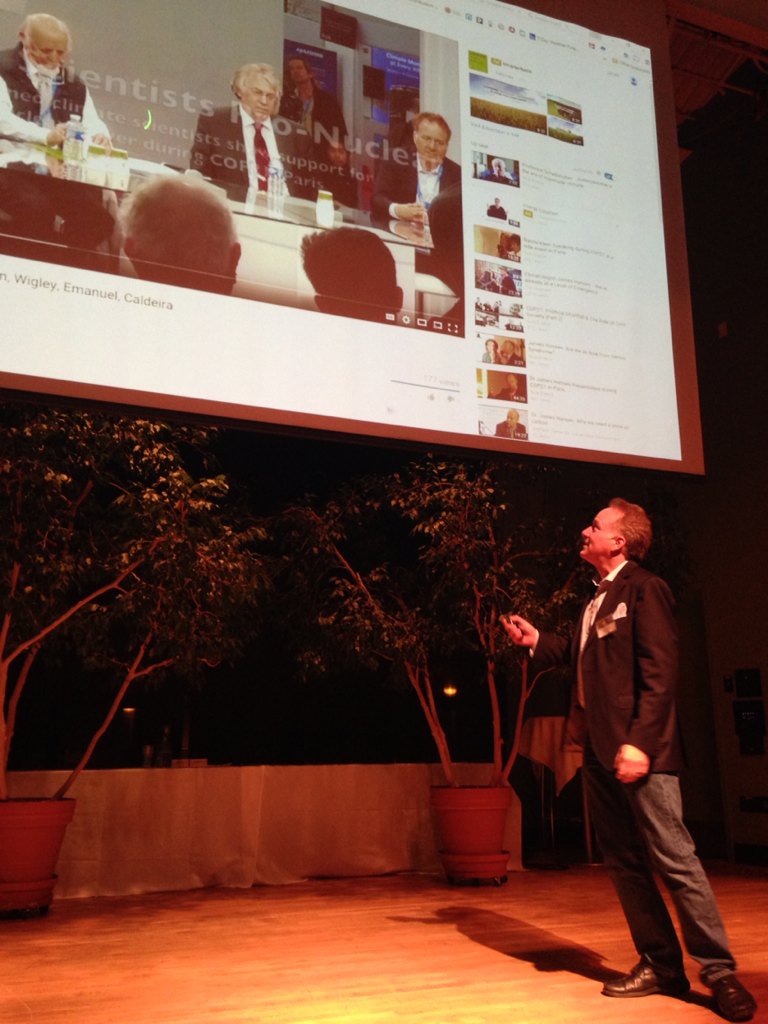
Distinguished climate scientists, policymakers, and practitioners participated in a major national conference on climate science and climate change right here at UC Santa Cruz on Friday, February 26 and Saturday, February 27, 2016. Presented by the divisions of Social Sciences and Physical and Biological Sciences, the theme of the third annual climate science & policy conference was "Earth's Climate Future: Uncharted Territory." The three panels focused on public health, geoengineering, and geopolitics.

The opening keynote address was given by Ken Caldeira, a world renowned climate scientist working for the Carnegie Institution for Science, Department of Global Ecology at Stanford University. He investigates issues related to the global carbon cycle, marine biogeochemistry, climate intervention, and energy technology.

Ken Caldera during his opening keynote 
photo courtesy of UCSC Social Sciences

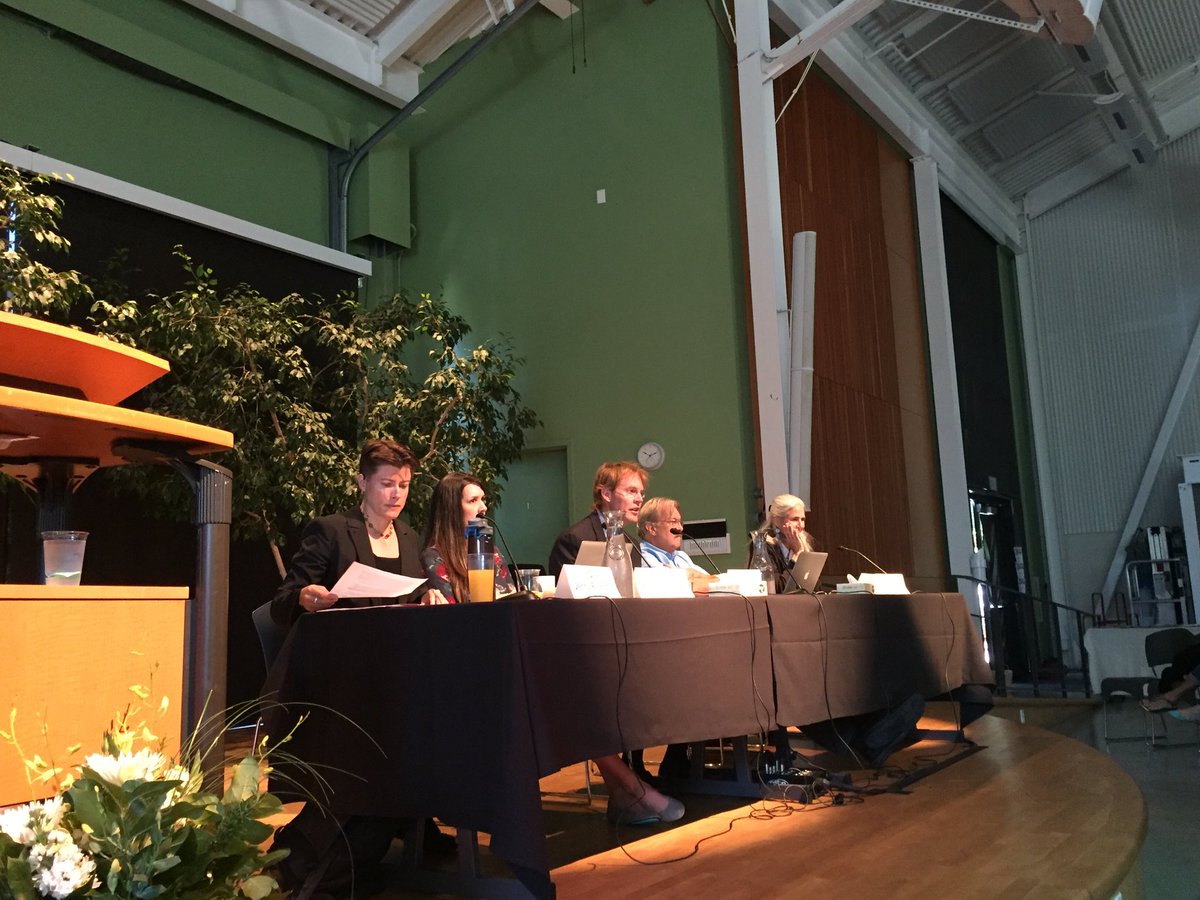
The first panel, "Emerging Disease, Public Health, and Climate Change," discussed the potential links between public health, disease, and climate change. Marm Kilpatrick, Associate Professor of Ecology & Evolutionary Biology at UCSC, affirmed that climate change might play a role in the transmission of diseases. However, he and other panelists stressed that the relationship between climate change and disease is difficult to predict. Much is still unknown.  Policy-wise, Mercedes Pascual of University of Chicago said we must act with this uncertainty in mind by advocating for better surveillance and intervention globally. Daniel Brooks of University of Nebraska emphasized this point stating, "An ounce of prevention is worth a pound of cure."

"Emerging Disease, Public Health, and Climate Change" Panel
photo courtesy of UCSC Social Sciences

The second panel, "Geoengineering and Climate Change" discussed the ethics of geoengineering, the social, political, and economic issues, and the possibility of implementing it as a policy. Most of the panelists were skeptical of geoengineering, arguing that more research needed to be done before anything close to implementation could be considered. However, all agreed that an international governance must be implemented with an emphasis on transparency if geoengineering was ever implemented large-scale.  Jeffrey Kiehl of the National Center for Atmospheric Research raised a compelling point, stating that instead of looking for quick solutions (such as altering the environment, geoengineering), we must face the real problem of dependence on fossil fuels and the resulting greenhouse gas and carbon dioxide emissions.

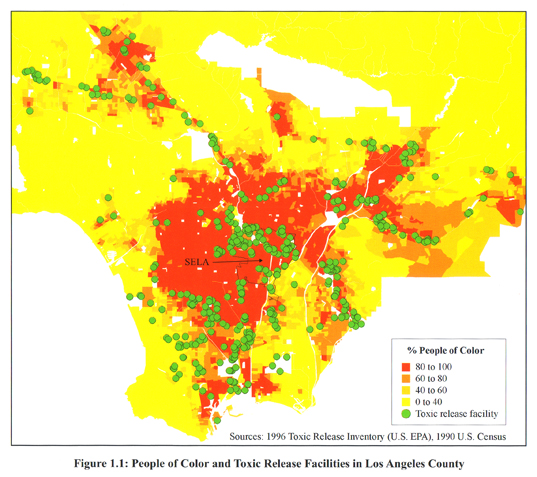
The third panel, "The Geopolitics of Climate Change" addressed the social and political issues revolving around climate change. Jaqueline Patterson of the NAACP Climate Gap Initiative highlighted the fact that low-income people of color are far more likely than wealthier white families to live next to toxic facilities. Also, these areas are already weakened by food insecurities and low numbers of health insurance carriers. She called for more regenerative, cooperative policies that uplift communities instead of extractive, unsustainable policies that represent only the interests of corporations. Diana Liverman of University of Arizone agreed, stating that "Those who are most vulnerable are usually least responsible." Liverman spoke on the concept of adaptation, the idea of helping people and other species survive in a warmer world through payments and allocations.

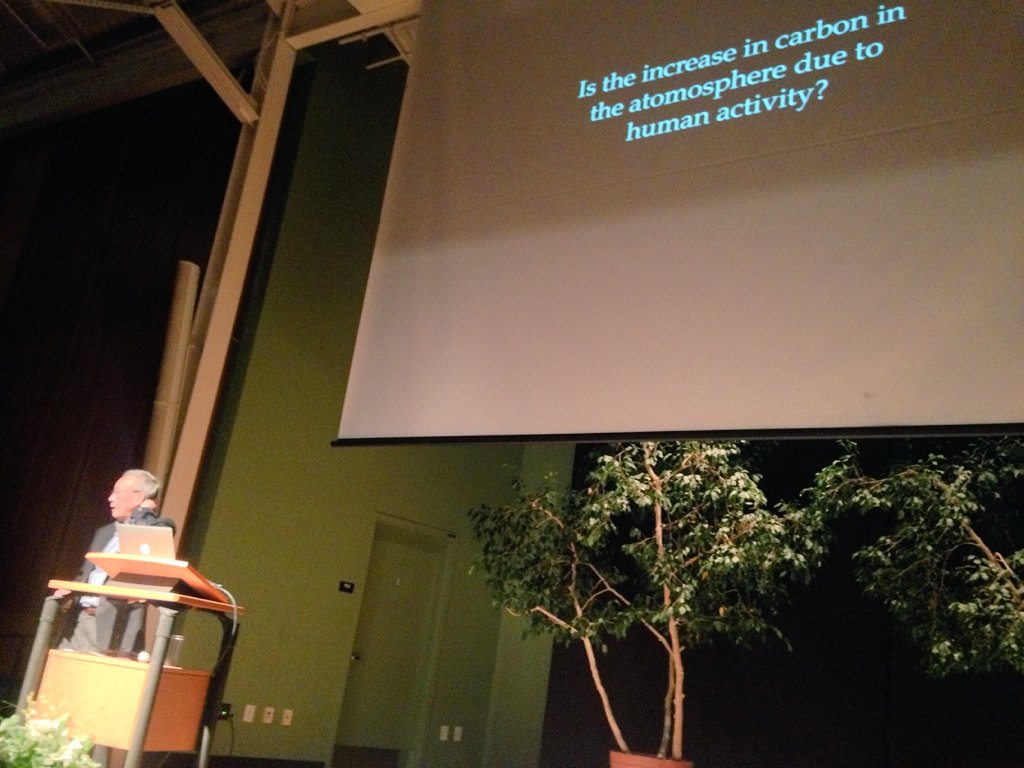
Chancellor George Blumenthal introduced Steven Chu, former U.S. secretary of energy and winner of the 1997 Nobel Prize in Physics, who spoke on "Climate Change and a Low-Cost Path to Sustainable Energy" at the Fred Keeley Lecture, the conclusion to the two day conference.  Chu served as secretary of energy under President Obama from 2009 to 2013. He spoke about the increase in carbon activity as an effect of human activity, and what must be done to lower it such as producing more energy from renewable sources, carbon dioxide capture and sequestration, and using fuels with lower carbon contents.

Steven Chu during the Fred Keeley Lecture
photo courtesy of UCSC Social Sciences
The conference provided attendees with plenty of information, perspectives, and thoughts about the challenges we face as a planet. Our task now is to take action and create solutions for a sustainable, just, and thriving future.

Click here for more useful links.

Join the discussion and check out the live tweets that Education & Outreach Associate Preethi Ruvva tweeted during the conference here!  

Monday, November 30, 2015

Why You Should Care About the Cool Campus Challenge

By: Jamison Czarneki, UC Santa Cruz Carbon Neutrality Initiative Fellow 

October 6th, 2015 marked the beginning of the first ever UC wide Cool Campus Challenge. C3, as it is being called now, is a 10 week UC inter campus competition that encourages students, staff, and faculty to lower their carbon footprint. This challenge is designed to get people talking about UCOP’s Carbon Neutrality Goal by 2025 where we hope to be the first US university system to do so! Some people say this competition distracts us from the real issues around neutrality, but I believe this has allowed for the opposite. Instead of distracting us, it is enthralling us to talk about carbon neutrality. It’s getting people excited about this initiative and allows a space to take a tiny step to help the campus work to achieve this goal. If people really took the time to look into the actions they can pledge, they would learn so much about their carbon impact! Ever heard of vampire loads? They suck the energy (and money) right out from you.  There are a ton of ways you can learn to lower your footprint as you pledge actions. By doing so, there are even prizes to win for everyone who participates!

So how does the competition work? Participants sign up and make a quick account on the Cool Campus Challenge website.  After signing up, there are a list of actions to pledge and a space for non-listed actions (for the more creative minded person). Every action you pledge, you verify with a picture or story to get points, and those points add up for you and the campus! The more points you earn, the more chances you have to win prizes such as solar chargers, Itunes gift cards, or a brand new Momemtum Bicycle! The competition goes until December 10th and UCSC needs your help! Currently, we’re in 4th place. Every point that you earn shows the UC Regents that we care about Carbon Neutrality and we’re excited for it. So log in, pledge actions, and let’s own this competition!

Tuesday, November 17, 2015

Systemic Oppression and the Natural World

Written by Jay Luce Nelson, UC Santa Cruz student and Chancellor's Undergraduate Intern for the Sustainability Office


Source: 1996 Toxic Release Inventory (U.S. EPA), 1990 U.S. Census.

To me, social sustainability is just as important as environmental sustainability. Where environmental sustainability seeks to take care of our nonhuman environment, social sustainability cares for cultures and communities. If the idea of sustainability as a whole is to preserve and improve future generations’ standard of living, how can we hope for a better future for all without addressing racism, ableism, cissexism, and other systems of oppressive power dynamics? For me, the ideal form of sustainability activism combines both human and nonhuman aspects and celebrates the achievements and contributions of marginalized groups while challenging societal systems of power and oppression.

Before I go on, I want to say that nothing I am saying here is new. This information is out there if you look, already discussed by people who know far more about sustainability than I do at a much more personal level, many of whom are people of color speaking out about their own experiences. The information might be scattered through short personal blog posts and comments on news reports, but it is out there.

There is plenty to say about sustainability as a wholeand even environmental sustainability specificallythat demands more attention than it currently receives. There is always a need to discuss the destructive roles of colonization, colonialism, racism, industrialization, and capitalism in our treatment of the land, particularly in the United States but in other previous colonies as well. (A particularly horrifying yet rarely discussed example is the millions of deaths resulting from Belgium’s demand for collection of rubber from rubber trees in the Congo, documented in Adam Hochschild’s book King Leopold’s Ghost.) There is a need to address ongoing environmental racism in urban planning. There is always a need to discuss native land practices, which have often been formed over time through long processes of learning about the unique traits of the land, and recognize that there are and always will be people following these practices.

These issues will not go away in time if they are not addressed. I encourage everyone to look into these and search for the opinions and experiences of the lives these issues have affected. Academia is credible, but it cannot overshadow individuals. I wish I had more resources than I actually do regarding these vital topics but, for me at least, the greatest resource has always been listening to others about their experiences. Much of what I know about sustainability I learned in high school from paying attention on microblogging platforms and social media. I know that there is always more for me to learn.

So keep listening to others. Keep learning. Do not let academia detach you from the emotions of those that sustainability initiatives affect. And most of all, keep thinking about the root causes of these issues and addressing the systems of power and oppression behind them.

Tuesday, October 27, 2015

Why Practicing Sustainability Matters


As a member of the Education and Outreach Team at the Sustainability Office, I get asked questions about several things. For example, some frequently asked questions are what we here at the Sustainability Office do, how to be more sustainable, or what’s in our newsletter. These questions are standard to me, and I can fire off the correct answer without even really thinking about it. But every once in awhile I will get a question that stumps me, one I had to seriously think about before I could answer.
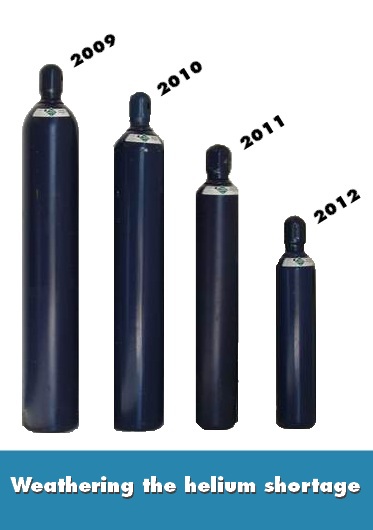
One of my close friends asked me why turning off electronics that weren’t being used or using less water even mattered. Even if he did all the sustainable, “green things to do” (in his words), it would not matter, because one person couldn’t fix all the problems. His words reminded me of myself a few years ago. I thought that being sustainable was futile, there would still be pollution, deforestation, global warming, and a whole plethora of environmental problems that would not be solved by me using less plastic. In fact, I said so to my AP Biology teacher in high school while he was trying to explain why we should try to live more eco-friendly lives. He brought up an example of the helium shortage, which is a fairly big problem for scientists. Scientists use helium in a number of things -cryogenics, water manufacturing, energy accelerators. Helium basically powers superconductors instead of electricity. And this shortage not only affected prices but also scientific practices. However, scientists came up with somewhat of a solution -they are creating their own supply. They created a technique to recapture the helium that was created as a byproduct to their scientific reactions and reused it! By adopting a sustainable practice, these scientists were able to use and preserve their limited resources wisely. 

Image Source
This is why even one person adopting sustainable practices is truly making a difference. By doing little things like turning the lights off or taking public transportation, we are doing all that we can to help out. Our global future depends on sustainable practices! The environment is connected to everything we care about. By deteriorating it and wasting our limited resources, we degrade our quality of live, and the lives of those that come after us. By adopting these sustainable practices, we not only contribute to achieving the primary goals of sustainability, but we are also investing in our future.

Image Source


Monday, March 2, 2015

Green Building Student Alliance

Have you ever wondered what goes into making a building energy, water, and waste efficient? How can UCSC support sustainability in building designs and retrofits? What can you do to support these efforts? Tatiana Gefter (Green Building Campaign Coordinator for the Student Environmental Center), Grant Waldron (Provost's Sustainability Intern for Climate Action), and other students are collaborating to create a Green Building Student Alliance. This group will serve as a student advising resource to campus architects and project managers with a goal of increasing student participation in campus infrastructure design to keep the environment in mind.

With the West Campus Housing Development Plan in the works, the need for this type of student advising group is essential in making sure that student needs are heard and met. The Green Building Student Alliance plans to be a monthly collaborative discussion where doors are open to any and all students. In this space, the group will examine and deliberate decisions affecting the expansion of campus buildings. In addition, it will serve to help share resources and support fellow organizations with their goals while pursuing goals for sustainable infrastructure on campus.

Please email Tatiana Gefter at tgefter[at]ucsc[dot]edu if you or an organization you're involved with would be interested in participating in the Green Building Student Alliance.

Image above is Engineering 2, the first LEED-certified building at UCSC. LEED stands for Leadership in Energy & Environmental Design. Other LEED buildings (both retrofits and new buildings) include the Cowell Student Health Center, Biomedical Building,  and the Porter residence halls. For a complete listing of UC LEED-certified buildings, click here.

Thursday, January 22, 2015

What We Did: Inter-Org 2015

On January 9th-11th, the Campus Sustainability Office planned and hosted their 5th annual weekend retreat for a variety of organizations. The beauty of the Inter-Organizational retreat is that attendees' primary focus does not have to be sustainability. Groups with a variety of interests and foci were in attendance. The unique point of view that every organization brought made for a far richer experience. The first night, Friday, took place on campus, while the remainder of the retreat took place in Boulder Creek, California at the YMCA Camp Campbell.


Friday night began in the Stevenson Event Center with a delicious dinner prepared by volunteers, and the Inter-Org Foods subcommittee. The planning team would like to thank PICA for letting them use their kitchen and supplies to cook the meal on Friday evening. The meal consisted of delicious, spicy vegan chili and tortilla chips. Dessert was a delicious gluten-free, dairy-free brownie. There was assigned seating so that attendees were forced out of their comfort zone by being required to meet new people and mix and mingle with other organizations and individuals. Thanks to Lily Urmann and Chris Kane, two UCSC student leaders, we were all able to silk screen our white t-shirts after dinner, with the weekend's motto: "Communi[ty]cation!"


Next, we were introduced to the Recreation Department's Experiential Leadership Program. It consisted of an awesome group of student leaders who taught us activities that allowed us to practice the skills necessary to working well in a group. One activity that stood out as particularly fun was the blind-fold maze. We were placed in groups of two, and one member wore a blindfold. The other member of the pair had to guide the blindfolded individual across the maze through their directions- no physical guidance was allowed! If you stepped on the cones, you were frozen! Communication and trust were absolutely integral to playing this game; just as communication and trust are an integral part of working together in an office and organization!


Friday night ended with fun skits! Each of the team building groups were given about 15 minutes to create their own original cheer, chant, rap or story that was representative of their evening at the Inter-Org kick off dinner. Shortly after, most went home to pack and get their camping gear in order for our early morning the following Saturday.


Saturday morning kicked off with a great seminar by Generation Waking Up, led by Mira Michelle of PICA, Tawn Kennedy of Green Ways to School/People Power/Sierra Club, and Maiya Evans of UCSF. Generation Waking Up is an open source curriculum that works to ignite the passion in young people to bring forth a more sustainable world.


After Generation Waking Up, attendees were treated to a variety of workshops presented by our fellow student organizations. Some workshops topics included Cultural Resilience, Biomimicry, and Compassion. The workshops left everyone feeling energized and full of new knowledge and understanding. After the student-led workshops, everyone shared a delicious dinner together and then gathered at the campfire for the annual talent show! It is amazing how much talent each and everyone individual who attended possesses!


The following morning, the retreat wound down with a delicious breakfast and break out sessions for individual organizations to gather and discuss ways to incorporate their newfound knowledge and inspiration into future projects. Inter-Org ended with a group circle where everyone shared a word that personally summed up their experience at the retreat.


Thanks to Lauren Korth for the photographs, and to everyone who made this retreat possible! If you are interested in getting involved in planning next year's retreat, please email Melina at mmeserol[at]ucsc[dot]edu.

Thursday, October 23, 2014

474 Students Visit the Natural Reserve Classroom

Week Two of Fall Quarter 2014 was a big one for getting students out into our grand Campus Natural Reserve outdoor classroom here at UCSC. All of the following classes had on-campus field trips where students were able to explore living examples of their course content:

  • General Ecology (ENVS 24; 198 students in 10 sections) 
  • Development and Physiology (BIOE 20B; 98 students in 6 optional hikes)
  • Collaborative Learning (KRSG 72/172; 120 students in a one big group!)
  • Jack Mazza's Senior Project, the Natural History of UCSC Field Group (15 students)

In addition, 3 stewardship interns, 13 Forest Ecology Research Plot interns, 2 plant photo library interns, education/art/outreach intern, and 24 College 8 freshman during the C8 Sustainability Project worked on projects on the Campus Natural Reserve. Indeed a big week--474 students in total! Thanks to all for participating, and we hope to see you out there. Contact Alex Jones at asjones@ucsc.edu for information on internships, class field trips, and volunteer opportunities.


Saturday, May 4, 2013

Green Office Certification: Student Perspectives

As we near the end of the school year, the Green Office Certification (GOC) team is looking back at all we have accomplished and what lies ahead. Here are two accounts from GOC associates that will be graduating this June.


"My job as GOC program associate is to assess other offices on their sustainable practices and give them recommendations to become more sustainable. I have performed behavior, energy, and waste assessments for numerous offices across campus, and I have generated recommendation reports to further educate office members. While the participating office members are learning and benefiting from our program, I also have learned a lot along the way. Not only did I gain critical job skills, such as communication and analytic skills, I also expanded my knowledge of, and passion for, sustainability. During the assessments of each office, I always learn new things and become more inspired by the office’s innovations."
-Allen Chang

"I have worked out of the Sustainability Office for two years now, first as a Campus Sustainability Intern and then as a Green Office Certification Team Member. I am approaching my last few weeks as a UCSC undergraduate which means I also had to undertake the scary, nerve-racking process of getting a job. During my interviews I had the same question asked of me: “What is Green Office Certification at UCSC”? I was surprised how interested people were in what I have done for sustainability during my academic career. One employer even told me she is currently working with a certification group similar to GOC and took pleasure in letting me know that their most recent building was LEED Certified! Needless to say, I am quite happy this employer was the one to offer me a full-time position! I will be looking forward to new and different ways sustainability may incorporate itself in my career after college, both at this new company and any other future work environment."
-Christian Frederick

Both of these guys will be dearly missed next year, but we know that their experience working in the Sustainability Office has provided them with the resources to excel beyond college. Good luck you two!

If you are interested in learning more about Green Office Certification or the work we do, check out our website or email greenoffices@ucsc.edu. And if you are interested in working with us, or any other sustainability org, view our job listings website.

Wednesday, April 24, 2013

Laurel Goes Plastic Free, a Student Perspective

by Laurel Marks, Student Coordinator for the Zero Waste Team 


Photo Credit: Plastics Today
Through my job as the Student Coordinator for the Zero Waste Team at the UC Santa Cruz Sustainability Office, I had the wonderful opportunity to attend the Zero Waste Youth Convergence on March 17, 2013, in San Francisco.  One of the most inspirational speakers that I saw there was Beth Terry.

In 2007 Beth was inspired by the growing horrors of plastic-filled oceans and global warming and  decided to radically change her life by going plastic free. It wasn’t easy, especially since more and more things are packaged in plastic these days, but Beth was passionate about changing the world with her personal actions.  She documented her challenges and successes on her blog myplasticfreelife.com and created a plastic-free guide to help others on the path toward a more sustainable life.

After seeing Beth speak and many other incredible visionaries at the conference, I decided to take my own plastic-free challenge. I began by reading Beth Terry’s plastic-free guide. On April 1st I went to the local natural food store (next time I’ll go to the farmer’s market!), prepared to avoid all plastic.

The foods that I miss most include:

  • fresh strawberries (because of the plastic container--maybe I can get some in my own bag at the farmers' market)
  • tofu (I’m vegetarian so I cook tofu a lot)
  • orange juice (I caved in once and bought some for smoothies... they’re my weakness)
  • cereal
  • yogurt
  • Luna bars that I eat on the run at school for an energy boost. 
I’m lucky because my house already has a wonderful composting system that feeds our beautiful backyard, and we are growing lettuce, strawberries, raspberries, and other delicious foods!

I've had to think ahead and get creative when it comes to food on-the-go. On my last shopping run I bought some dried fruit and yogurt covered pretzels in bulk (with my own reusable paper bags) to eat as a snack during the day. At cafes I now ask for reusable utensils, and at the burrito shop I get the burrito to-go without a plastic bag. I ask for no straw with my drinks and bring my own utensils in my purse. 

Some of the challenges that a plastic-free lifestyle brings I knew I wouldn’t be able to face just yet.  One example is giving up shampoo, conditioner, toothpaste, and other bathroom products that come in plastic containers.  Beth has some wonderful recipes for making your own shampoo, soap, deodorant, and lotion on her website, but I knew with my busy life I wouldn’t have time to try all those. Fortunately I already had all these items and haven’t run out yet.  

The goal is not to throw away every item you own that contains plastic, but to use everything to its full potential without acquiring any new plastic. And don’t forget to try to fix what’s broken before buying something new, buy used, go to thrift stores, clothing swaps, and check out item swap websites like yerdle.com

Just because we live in a single-use, wasteful world doesn’t mean we have to comply!  Be the change you wish to see in the world.  It’s been a difficult experience, but a fun one too, and I am so proud of myself for truly living a lifestyle I believe in!

For more on Beth Terry and her plastic free lifestyle check out our previous article.

Thursday, May 31, 2012

Fight Climate Change with a Thought


Article by Tan Ha, Climate Action CUIP

I struggle with the idea of greenhouse gas emissions. It is not like I do not understand how much damage it causes to the environment. As the UCSC Sustainability Office’s Climate Action Intern, I can tell you about state-wide reduction goals and exactly how many metric tons of carbon dioxide equivalent (MTCO2e) emissions our campus needs to reduce. However, what does it really mean when I tell you that we are trying to reduce 27,000 MTCO2e by year 2020?

I reflect on this as I calculate emission factors for the next Climate Action Plan. I realize that fighting against the trends of global warming will take more than measuring GHG inventories or drafting plans for administers and planners alike. But official planning documents do not inspire the larger demographic such as students and community members to live a carbon neutral lifestyle.

Even with prior knowledge of the lofty goal of reducing 27,000 MTCO2e, I need to remind myself that it is equivalent to stopping 3 million gallons of gasoline from burning annually after 2020. I imagine the scorching gasoline near where I live. I smell the viscous fumes robbing the fresh air released from the vibrant Santa Cruz trees. Then I remember that I am privileged to not see this in front of me. I recognize that this “fire” caused by the UCSC community is unbounded and threatens the global environment. However, developing countries are in the heat of the fire. They are at greater risk as they have fewer resources to protect themselves from these increased “natural disasters.” Every person, institution, region, nation, and global entity is a stakeholder of the problems and solutions associated with climate change. I want to take this opportunity not to ramble about how bad it is but invite my readers to look into this problem as an opportunity. It is our chance as young, curious individuals to ask how my lifestyle can affect the world. I like to entertain the idea that although the problem may be beyond one person’s work, it should be within the means of our collective effort. So let us take baby steps in our life. Before we know it, we may easily put out a fire of 3 million gallons of gasoline. It is our ambition, concerns, and belief systems that drive us to consciously shape the world so that future generations can know how passionately we fought for life on earth. What does it mean to turn off the lights, ride your bike, or shop locally? I don’t fully understand but I challenge you to find this answer with me.


Image courtesy of  scotthaefner.com

Early Educational Services: Teaching Eco-Responsibility to the Next Generation

Article by Grace Sorenson, Campus Sustainability Intern

From 11-month-old infants to pre-teens, the children in the Early Educational Services program at UC Santa Cruz are instilled with environmentally-conscious behaviors from day one.

“We are caretakers, but we are also preparing them to be responsible adults, and that includes behaviors such as recycling and composting,” says Sohyla Fathi, Director of Early Educational Services.

All food served at EES is prepared on campus. The menu is minimally processed and simple, and is organic or from the garden when possible. The kids eat together with their instructors, and green dishes for compost are located at each table. Reusable silverware and dishes are used at every meal. Each placemat at the tables is a laminated graphic delineating the basic food groups—grains, vegetables, fruits, protein, and dairy.

In the classroom where the youngest bracket of children are cared for, boys and girls between 11 months and 2 years old sit around a table with an instructor joyfully eating fruits and vegetables and cheese. A dish for compostable food scraps is on each table, and though they’re a bit too young to separate dairy products and vegetable matter, it seems that it’s never too early to start modeling the composting process. An instructor enthusiastically shows me a nearby poster with photographs of their regular field trip to the adjacent College Eight garden, where they empty their buckets into the garden’s compost.

In the sprawling outdoor play area there is a garden, and a nearby workstation with dwarf-sized gardening tools and a long line of miniature watering cans. There are tomato plants, parsley, cilantro, peas, basil, oregano, and mint. Sohlya explains that the kids plant the garden together and are each designated a specific plant that becomes their responsibility to care for and water. “That one’s mine!” a small blonde girl yells proudly, pointing emphatically at an oregano plant. When certain herbs or vegetables are used for a meal, the children harvest what is needed and bring it to the cook.


Clearly labeled, multi-lingual recycling stations are stationed in each classroom. Skylights illuminate most of the rooms with natural light, and containers and toys are made of wood and other natural materials instead of plastic. The lush forest surrounding the entire facility seems to serve as daily reminder to the kids of what the “environment” is and why it’s worth preserving. The values and habits imprinted upon us when we are young often last our entire lives, and it is an environment like this that will help foster a more responsible, ecologically-aware generation of young adults.

Tuesday, May 22, 2012

IDEASS Student Perspective: Porter Greenovation Project

By Nisa Taylor, IDEASS Intern

The IDEASS (Impact Designs: Engineering and Sustainability through Student Service) course has given many students, like my IDEASS project partner Sarah and me, the opportunity to pursue hands-on projects that promote sustainability through outreach and green energy retrofits.

Our project, the Porter Greenovation Project, has worked on retrofitting the Porter Study Center to make it more sustainable. We have performed energy efficiency measures and analysis, and we used this information to receive a grant from the Carbon Fund to retrofit the Porter Study Center to increase its efficiency and save money. With the help of the Carbon Fund Grant, we were able to install a new energy efficient lighting system that uses maximizes the use of natural light. It incorporates pull-down blinds, occupancy sensors to sense when people are in the room, and light dimmers.

To demonstrate to students how sustainable the study center can be when we use it with energy in mind, we plan to install lighting system information and waste diversion signage in collaboration with the UCSC's Zero Waste by 2020 campaign. Next year's annual Porter Fall Student Mural will be painted in the Porter Study Center with a sustainability theme to remind students about their healthy study space! Email Nisa if you want to learn more about getting involved with the project!

Please click here to find out more about IDEASS and apply today--the application deadline is June 20.