Pages

Connect With Us!

Showing posts with label global warming. Show all posts

Monday, February 29, 2016

Climate Science and Policy Conference 2016

Distinguished climate scientists, policymakers, and practitioners participated in a major national conference on climate science and climate change right here at UC Santa Cruz on Friday, February 26 and Saturday, February 27, 2016. Presented by the divisions of Social Sciences and Physical and Biological Sciences, the theme of the third annual climate science & policy conference was "Earth's Climate Future: Uncharted Territory." The three panels focused on public health, geoengineering, and geopolitics.

The opening keynote address was given by Ken Caldeira, a world renowned climate scientist working for the Carnegie Institution for Science, Department of Global Ecology at Stanford University. He investigates issues related to the global carbon cycle, marine biogeochemistry, climate intervention, and energy technology.
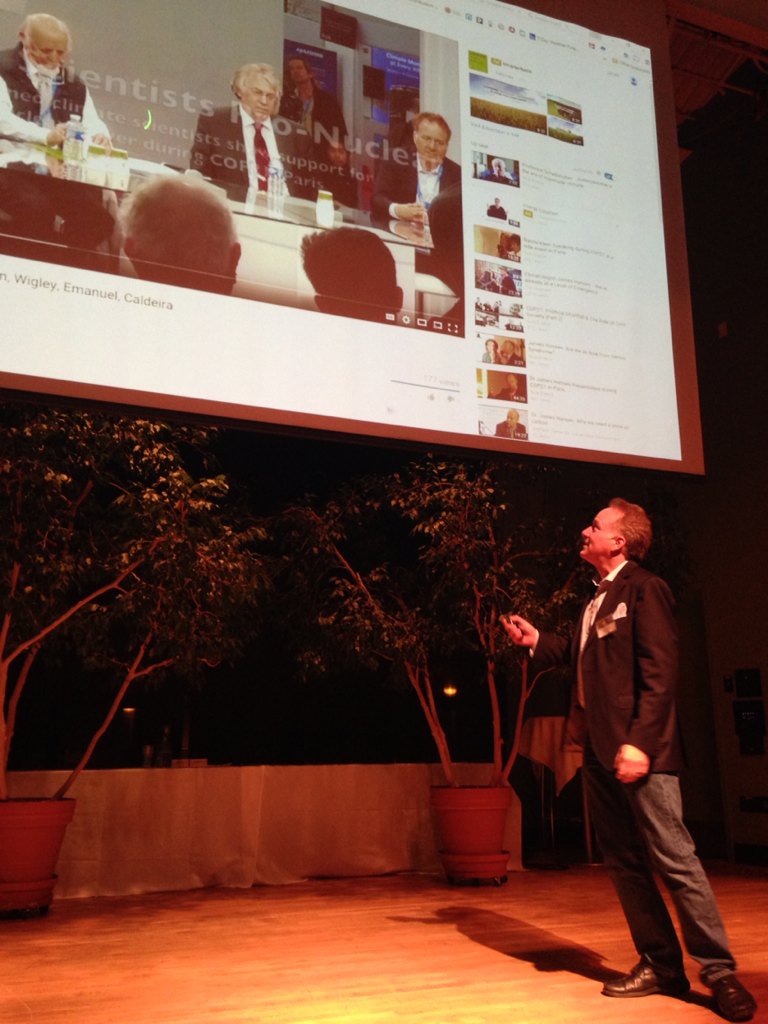
Ken Caldera during his opening keynote 
photo courtesy of UCSC Social Sciences

The first panel, "Emerging Disease, Public Health, and Climate Change," discussed the potential links between public health, disease, and climate change. Marm Kilpatrick, Associate Professor of Ecology & Evolutionary Biology at UCSC, affirmed that climate change might play a role in the transmission of diseases. However, he and other panelists stressed that the relationship between climate change and disease is difficult to predict. Much is still unknown.  Policy-wise, Mercedes Pascual of University of Chicago said we must act with this uncertainty in mind by advocating for better surveillance and intervention globally. Daniel Brooks of University of Nebraska emphasized this point stating, "An ounce of prevention is worth a pound of cure."
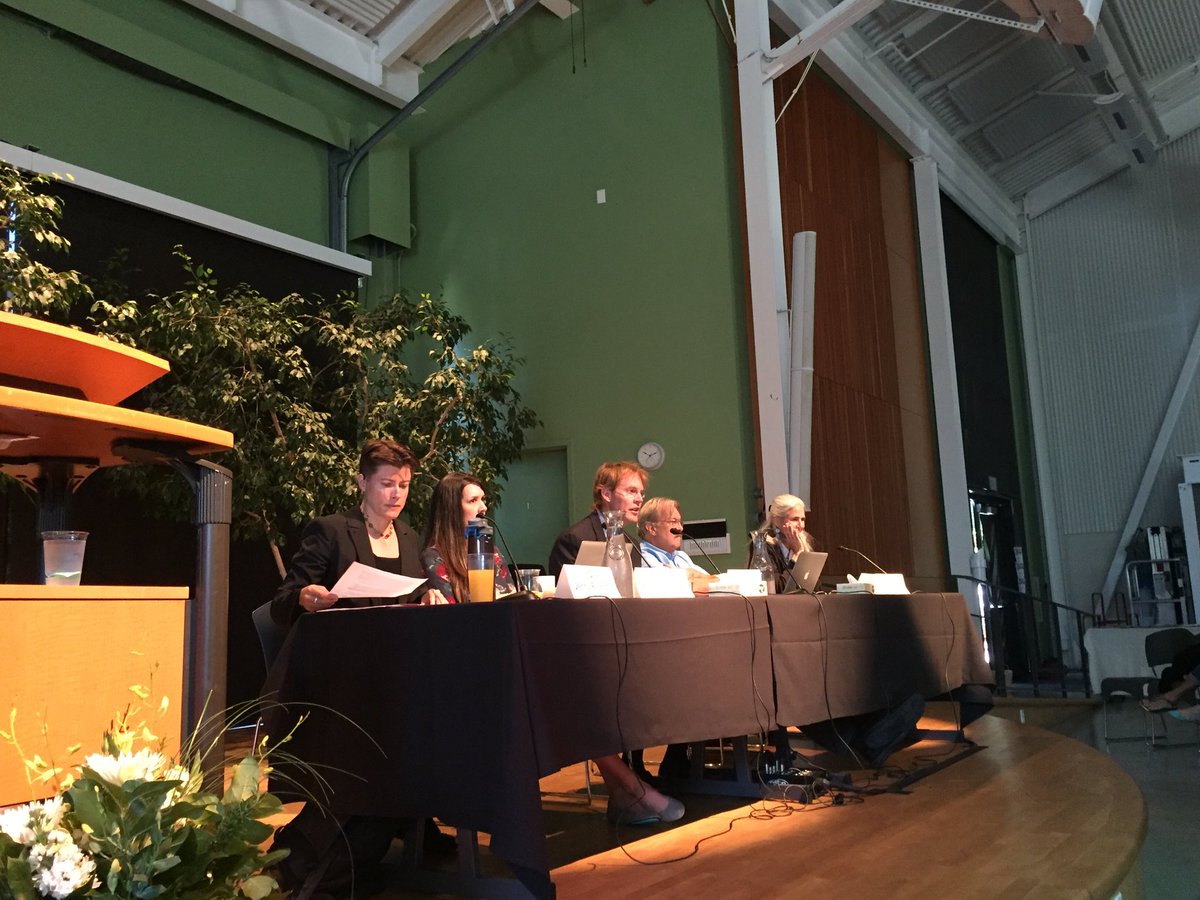
"Emerging Disease, Public Health, and Climate Change" Panel
photo courtesy of UCSC Social Sciences

The second panel, "Geoengineering and Climate Change" discussed the ethics of geoengineering, the social, political, and economic issues, and the possibility of implementing it as a policy. Most of the panelists were skeptical of geoengineering, arguing that more research needed to be done before anything close to implementation could be considered. However, all agreed that an international governance must be implemented with an emphasis on transparency if geoengineering was ever implemented large-scale.  Jeffrey Kiehl of the National Center for Atmospheric Research raised a compelling point, stating that instead of looking for quick solutions (such as altering the environment, geoengineering), we must face the real problem of dependence on fossil fuels and the resulting greenhouse gas and carbon dioxide emissions.

The third panel, "The Geopolitics of Climate Change" addressed the social and political issues revolving around climate change. Jaqueline Patterson of the NAACP Climate Gap Initiative highlighted the fact that low-income people of color are far more likely than wealthier white families to live next to toxic facilities. Also, these areas are already weakened by food insecurities and low numbers of health insurance carriers. She called for more regenerative, cooperative policies that uplift communities instead of extractive, unsustainable policies that represent only the interests of corporations. Diana Liverman of University of Arizone agreed, stating that "Those who are most vulnerable are usually least responsible." Liverman spoke on the concept of adaptation, the idea of helping people and other species survive in a warmer world through payments and allocations.

Chancellor George Blumenthal introduced Steven Chu, former U.S. secretary of energy and winner of the 1997 Nobel Prize in Physics, who spoke on "Climate Change and a Low-Cost Path to Sustainable Energy" at the Fred Keeley Lecture, the conclusion to the two day conference.  Chu served as secretary of energy under President Obama from 2009 to 2013. He spoke about the increase in carbon activity as an effect of human activity, and what must be done to lower it such as producing more energy from renewable sources, carbon dioxide capture and sequestration, and using fuels with lower carbon contents.
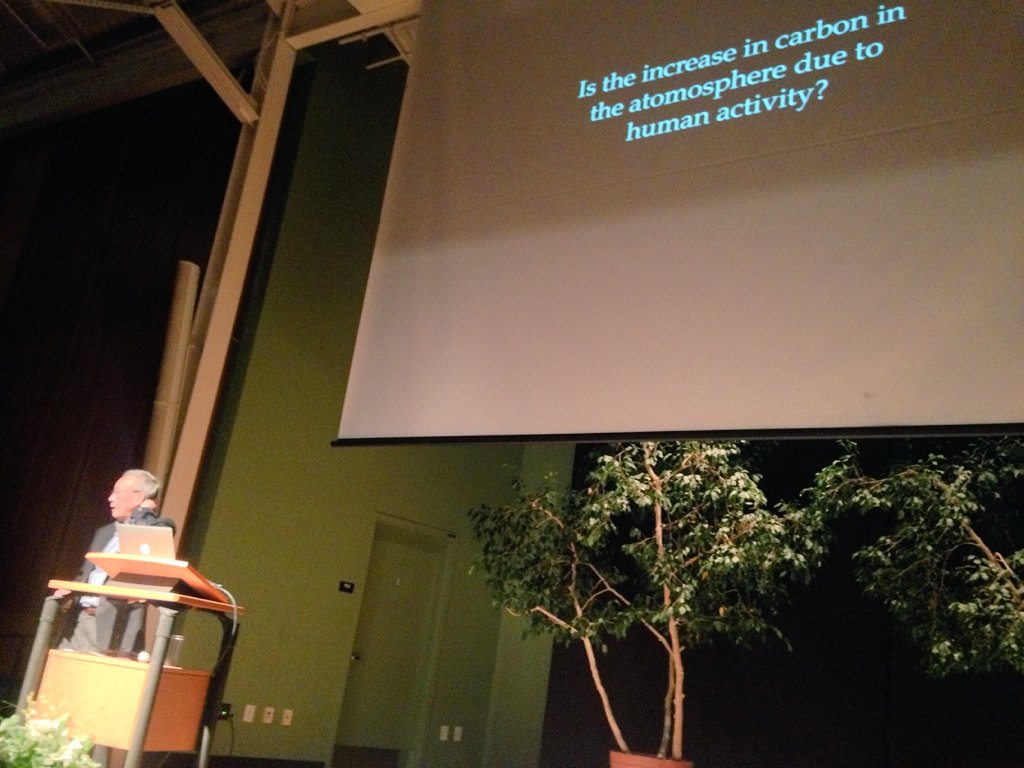
Steven Chu during the Fred Keeley Lecture
photo courtesy of UCSC Social Sciences
The conference provided attendees with plenty of information, perspectives, and thoughts about the challenges we face as a planet. Our task now is to take action and create solutions for a sustainable, just, and thriving future.

Click here for more useful links.

Join the discussion and check out the live tweets that Education & Outreach Associate Preethi Ruvva tweeted during the conference here!  

Friday, November 21, 2014

Why care about climate?

by Alden Phinney 

I stood watching glaciers crack and calve with a horrendous crash into bright blue swirling seas. It was summer in Alaska, around 80℉ (approximately 26℃), and I was on the deck of a monstrous cruise ship in Glacier Bay. Glacier Bay was named for its monolith of ice that once extended to the mouth of the sea. They estimate that by this summer no ice will touch the water in Glacier Bay.
  glacierbaymapice.gif
(Image source)
Over the loudspeaker, a National Park Ranger droned on about how “man-made global warming is a force outside our control”. I literally shouted “WHAT?!” to the heavens, and earned a couple of sideways glances from passengers trying to enjoy what remains of the great outdoors.

Climate change is a big and complex problem, no doubt. The rapid warming of the planet is arguably the most potent existential threat that our species and civilization has ever faced. But to argue that the problems of humankind are outside of humankind’s control was defeatist at best. To perpetuate this fallacy to the consumptive class most responsible for greenhouse gas emissions was appalling. The Ranger was preaching to a myopic choir singing slogans of American exceptionalism in the face of impending catastrophe.

We must be the change we intend to see in the world. In the face of climate change, we must pursue effective, equitable and bold action if we wish to live up to the United States’ mantle of a global leader. Continuing to advance the comfortable status quo at the expense of future generations is unconscionable. We are saddling our children with a debt repayable in war, droughts and famines.


I was disgusted by the gluttony, but more so by the apathy. Though the public discourse is rife with climate denial, the scientific consensus is settled. (Aggregate) global warming is occurring, is accelerating, and threatens every facet of human existence. However, it’s not all doom and gloom; according to the United Nations, the worst effects of climate change can still be avoided if governments quickly enact aggressive Greenhouse Gas (GHG) emissions reductions.

So when the world must set binding targets for GHG emissions, we should make every effort and sacrifice to be bold, to think forward and systemically, rather than backwards about the extractive industries that have driven economic growth for so long.
"The greater danger for us lies not in setting our aim too high and falling short, but in setting our aim too low and achieving our mark." - Michelangelo
Interested in learning more about climate action, climate justice or fossil fuel divestment at UCSC? Like Fossil Free UCSC on Facebook, check out the homepage of the Fossil Free campaign, or feel free to send me an email at aphinney [at] ucsc [dot] edu.

---

Alden Phinney is the Sustainability Office Climate Action Analyst through the Chancellor's Undergraduate Internship Program; a member of the Campus Sustainability Council; and a coordinator for Fossil Free UC Santa Cruz.

Monday, November 18, 2013

Innovative Approaches to Sustainability at Other Campuses

Here are a few selections of the innovative approaches to sustainability taking place on other college campuses. Each of these examples was chosen because they represent ideas that UCSC could potentially implement in some form, or in some cases, already has begun to. If you see something here that you want to make a reality at UCSC, contact the Sustainability Office at, sustain.education [at] ucsc [dot] edu and we will help you direct your ideas toward fruition!

U Maryland Uses Houseplants to Aid Indoor Air Quality
Helping staff and faculty members achieve silver status for its green office program, students from the University of Maryland's Institute of Applied Agriculture assist in the production of potting and maintaining plants for distribution. The program is even used as a teaching opportunity and they have a plant science class where students pot the plants and grow until distribution day. We also have Green Office Certification Program that works to empower our campus offices to implement sustainable practices in their everyday operations, but what if we too had a class that grew plants to distribute to offices?

U Maryland Celebrates 'Park(ing) Day'
Students from the University of Maryland's chapter of the American Society of Landscape Architects and the Arboretum and Botanical Garden recently converted two parking spaces into a public park in an effort to raise awareness of the importance of green spaces in urban areas. In celebration of the international environmental movement “PARK(ing) Day,” this university’s chapter of the American Society of Landscape Architects and the UMD Arboretum and Botanical Garden converted two parking spaces in front of Cole Field House into a public park. Re-imagine East Remote Parking lot with a celebration of different uses for that space!

Griffith U Creates Climate Change App
A university in Australia has newly released Coastal Ecosystems Response to Climate Change Synthesis Report app, which provides critical information for anticipating how climate change may impact on coastal Australia, will help the public navigate through science and make decisions about the growing climate change threat. With our proximity to the coast here at UCSC, it would be useful to have an app like this here to warn us of future climate change issues.

Western Washington U Students Pilot Rentable Mug Program
Each time a student enjoys a latte, tea or other hot beverage on campus, they are confronted with a choice: to use a single-use disposable cup or a reusable mug. In an effort to reduce waste and money spent on handling that waste, students from a Campus Sustainability Planning Studio class at Western Washington University initiated Project MUG this fall using grant funding from the university's green fee. Project MUG enables students to rent a reusable mug for beverages. Here, UCSC Dining has implemented a system that utilizes a FREE mobile phone application to track drink purchases with reusable mugs at Perk Coffee Bars. It is called GVING and it's really simple to use.

Thursday, May 31, 2012

Fight Climate Change with a Thought


Article by Tan Ha, Climate Action CUIP

I struggle with the idea of greenhouse gas emissions. It is not like I do not understand how much damage it causes to the environment. As the UCSC Sustainability Office’s Climate Action Intern, I can tell you about state-wide reduction goals and exactly how many metric tons of carbon dioxide equivalent (MTCO2e) emissions our campus needs to reduce. However, what does it really mean when I tell you that we are trying to reduce 27,000 MTCO2e by year 2020?

I reflect on this as I calculate emission factors for the next Climate Action Plan. I realize that fighting against the trends of global warming will take more than measuring GHG inventories or drafting plans for administers and planners alike. But official planning documents do not inspire the larger demographic such as students and community members to live a carbon neutral lifestyle.

Even with prior knowledge of the lofty goal of reducing 27,000 MTCO2e, I need to remind myself that it is equivalent to stopping 3 million gallons of gasoline from burning annually after 2020. I imagine the scorching gasoline near where I live. I smell the viscous fumes robbing the fresh air released from the vibrant Santa Cruz trees. Then I remember that I am privileged to not see this in front of me. I recognize that this “fire” caused by the UCSC community is unbounded and threatens the global environment. However, developing countries are in the heat of the fire. They are at greater risk as they have fewer resources to protect themselves from these increased “natural disasters.” Every person, institution, region, nation, and global entity is a stakeholder of the problems and solutions associated with climate change. I want to take this opportunity not to ramble about how bad it is but invite my readers to look into this problem as an opportunity. It is our chance as young, curious individuals to ask how my lifestyle can affect the world. I like to entertain the idea that although the problem may be beyond one person’s work, it should be within the means of our collective effort. So let us take baby steps in our life. Before we know it, we may easily put out a fire of 3 million gallons of gasoline. It is our ambition, concerns, and belief systems that drive us to consciously shape the world so that future generations can know how passionately we fought for life on earth. What does it mean to turn off the lights, ride your bike, or shop locally? I don’t fully understand but I challenge you to find this answer with me.


Image courtesy of  scotthaefner.com